Fixing the Shop Floor First: Why Smart Manufacturing Starts with the Basics
#Leadership #DigitalTransformation #Supplychain #SmartManufacturing #Operationalexcellence #DassaultSystèmes #ProMFG #Industry40 #BackToBasics“Without a mind shift from the top floor to the shop floor, digital transformation isn't an evolution - it's just expensive fashion.” - Balaji Kannan, TTK Prestige
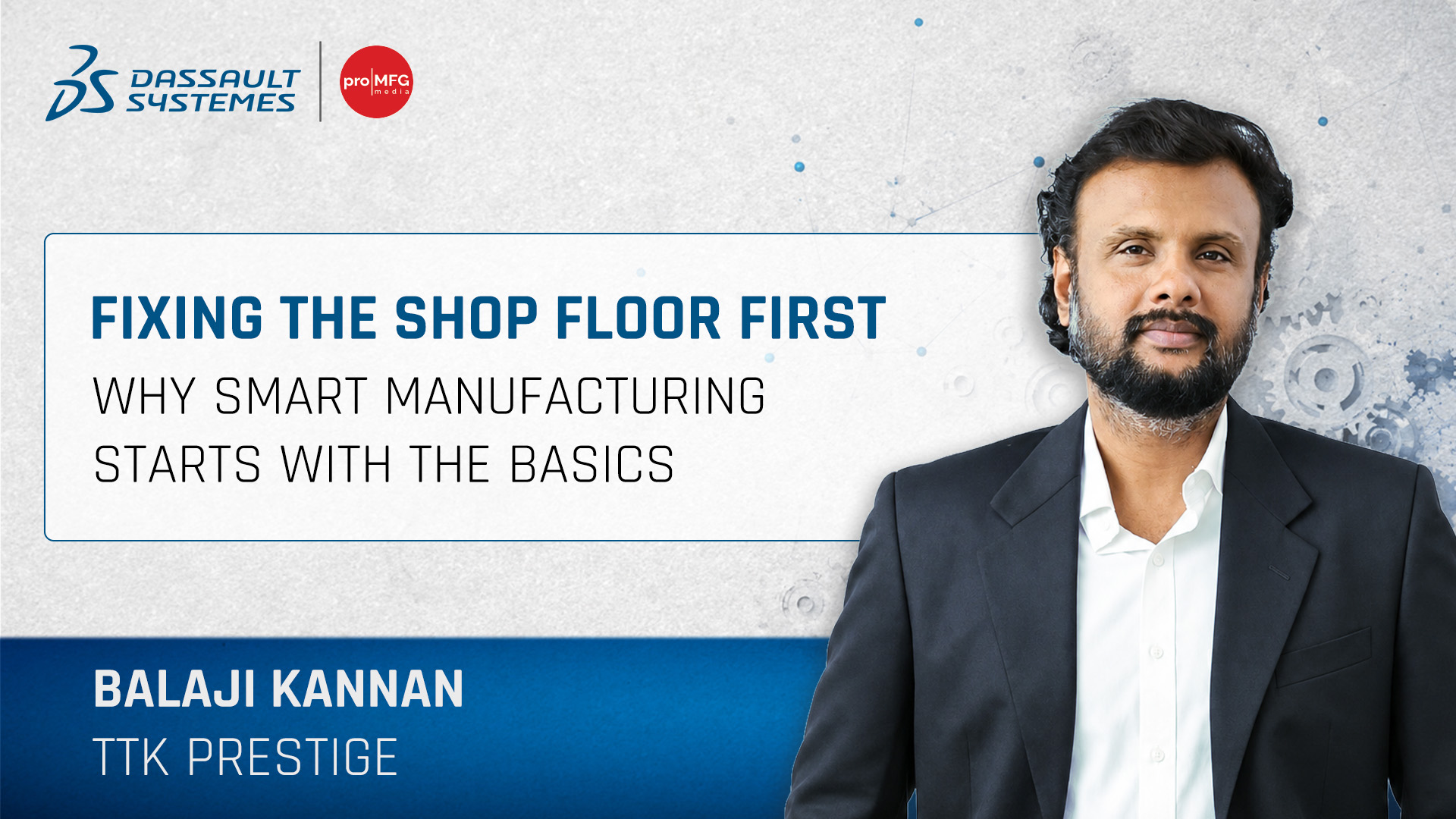
August 2026 : When leaders gather to dissect the future of industry, the air is usually thick with buzzwords: Artificial Intelligence, Internet of Things, Hyper-automation, and Digital Twins. But during a roundtable at the “Driving Profitable Growth Through Smart Manufacturing” - presented by Dassault Systèmes and Tata Technologies, powered by Pro MFG Media, and supported by ACMA India - Balaji Kannan from TTK Prestige delivered a grounded, refreshing reality check.
With many years in manufacturing under his belt - spanning automotive components to consumer durables - Kannan argued that before companies rush to buy shiny new tech, they need to fix three fundamental pillars: people, leadership mindset, and baseline data accuracy.
Addressing the impending crisis of migrant labor shortages, Kannan shared a compelling blueprint from his experience at TTK. Instead of fighting for the same transient talent pool, the company looked outward - specifically to a nearby village four kilometers off the highway.
By investing in basic community infrastructure - installing street cameras, building school water tanks, and supplying 800 liters of clean drinking water daily to local government schools - the company built trust. The result? A loyal, highly reliable workforce of over 550 employees, including nearly 250 local women over the age of 40.
Today, these women seamlessly power both the first and second shifts, practically eliminating absenteeism. “As leaders, we have to think uniquely,” Kannan noted. “We bridged our labor gap by simply elevating the community around us.”
Why do digital transformations fail? According to Kannan, leadership often falls into the trap of “fashion adoption” - buying trendy software that ends up as shelfware five years later.
The real barrier isn't technology; it's a deep-seated resistance to change that exists from shop floor operators all the way up to the CEO level. Leaders get caught up in chasing immediate ROI without building the discipline required to make technology stick.
To overcome this, leadership must cultivate a mindset where change is non-negotiable. It requires establishing rigid 15-, 30-, 60-, and 90-day pulse checks until a new system shifts from being a corporate mandate to an everyday lifestyle.
"The good news is everybody is talking about digital and sustainability. The bad news is everybody is talking about it - without real depth."
Perhaps Kannan’s most relatable observation was on the state of data quality. Despite decades of technological advancement, many manufacturing plants still rely on end-of-shift manual entries that result in absurdity - like inventory counts showing negative 2,050 units because a supervisor accidentally hit an extra zero.
To drive immediate ROI while working through cultural changes, Kannan highlighted two digital applications that have reached true operational maturity:
- 1 Automated Energy Management Systems (EMS): Tracking solar, grid, and diesel consumption daily to optimize energy spend - an initiative that previously earned his team a top-two global ranking.
- 2 Automated Supplier Scheduling: Digitizing receiving logs and inventory shortage alerts directly with suppliers to create a self-correcting supply cycle.
Smart manufacturing isn't about buying every platform on the market. It’s about building inclusive workforces, enforcing behavioral change, and getting daily shop-floor data right. Only when the foundation is solid can technology truly drive profitable growth.

NEWSLETTER
TRENDING ON PRO MFG


MORE FROM THE SECTION