Fortifying Maritime Assets: Advanced Corrosion Control & Life Extension Strategies
#PortInfrastructure #AssetIntegrity #CorrosionControl #MaritimeIndia #MarineEngineering #HenkelAdhesives #ProMFGMedia #CompositeRepair #InfrastructureProtection
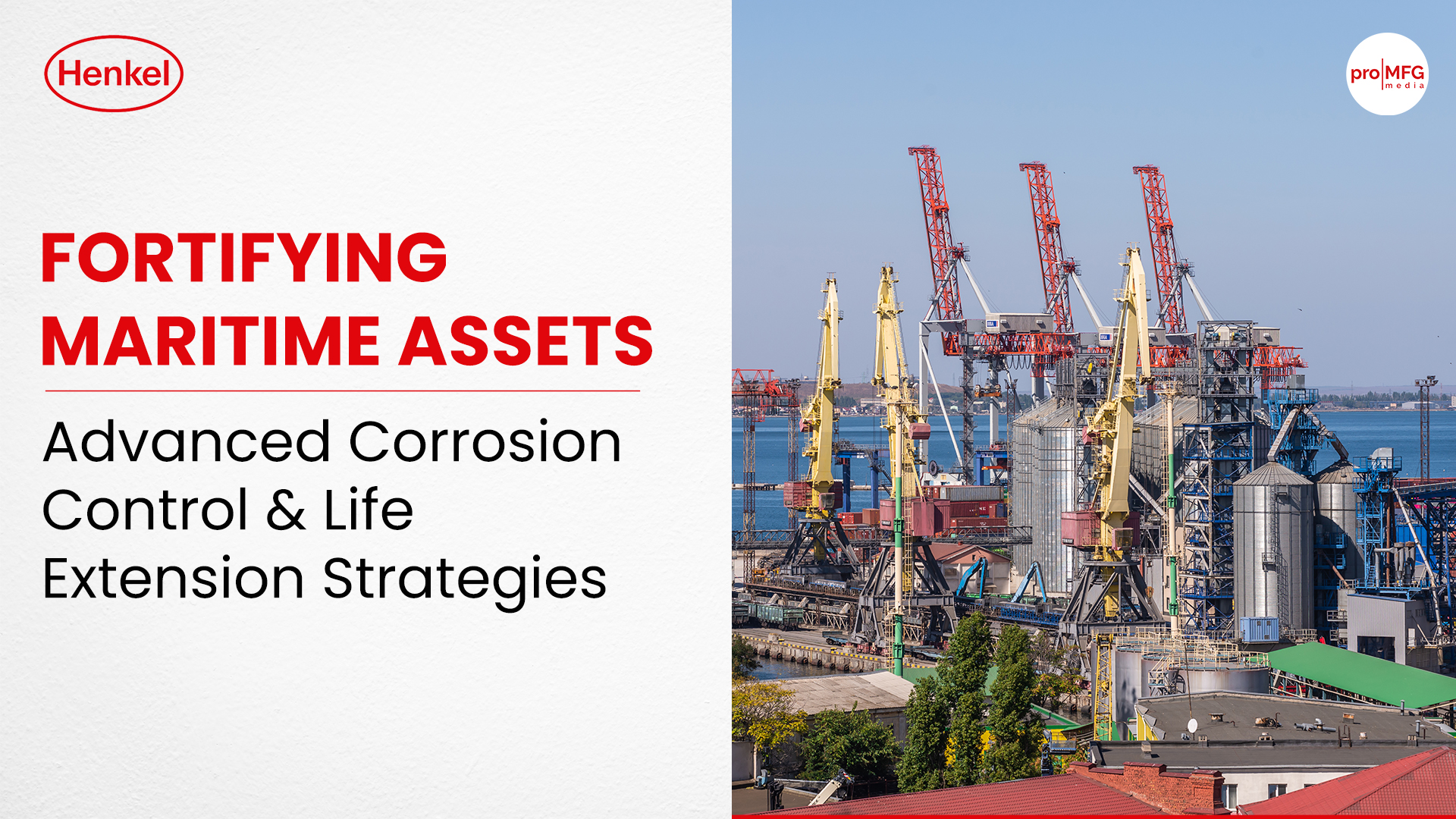
July 2026 : India's maritime and port infrastructure is entering an unprecedented expansion era, driven by ambitious national initiatives such as the Sagarmala Project, massive private port investments, expanding LNG terminals, and extensive subsea pipeline networks. However, this rapid growth faces a continuous and costly threat: corrosion. In harsh coastal and splash zone environments, degradation affects concrete jetty piles, marine pipelines, storage tanks, and structural steel - costing the Indian economy an estimated 3% to 5% of its GDP annually.
To address these critical challenges, Henkel Adhesive Technologies India, in collaboration with Pro MFG Media, organized an insightful webinar titled "Protecting Critical Port Infrastructure: Corrosion, Repair & Life Extension Strategies". Hosted by Bianca Chettiar (Pro MFG Media) alongside technical experts Mangesh Gokhale, Jigar Shah, and Andre Aragon, the session brought forward actionable, engineered solutions aimed at eliminating unplanned shutdowns, enhancing operational safety, and dramatically extending the service life of aging maritime assets.
To bridge the discussion on port infrastructure challenges with practical asset management, the expert panel outlined three targeted technological strategies. The session moved beyond simply identifying corrosion risks to exploring actionable, cold-applied maintenance innovations. By replacing traditional shutdown-heavy repairs with advanced materials, operators can safely rehabilitate critical marine infrastructure while ensuring continuous, uninterrupted terminal operations.
1. Visco-Elastic Coatings: Overcoming Surface Preparation Limits
Traditional liquid marine coatings rely heavily on aggressive abrasive blast cleaning (such as SA 2.5 or SA 3) to achieve adequate surface profile and adhesion. In active port environments, tidal splash zones, or hazardous operational areas, sandblasting is often impractical, costly, or strictly prohibited due to environmental and safety regulations. Polyisobutene-based visco-elastic coating systems, such as StopAq, solve this challenge by offering barrier protection that adapts to difficult field conditions without requiring heavy blasting equipment.
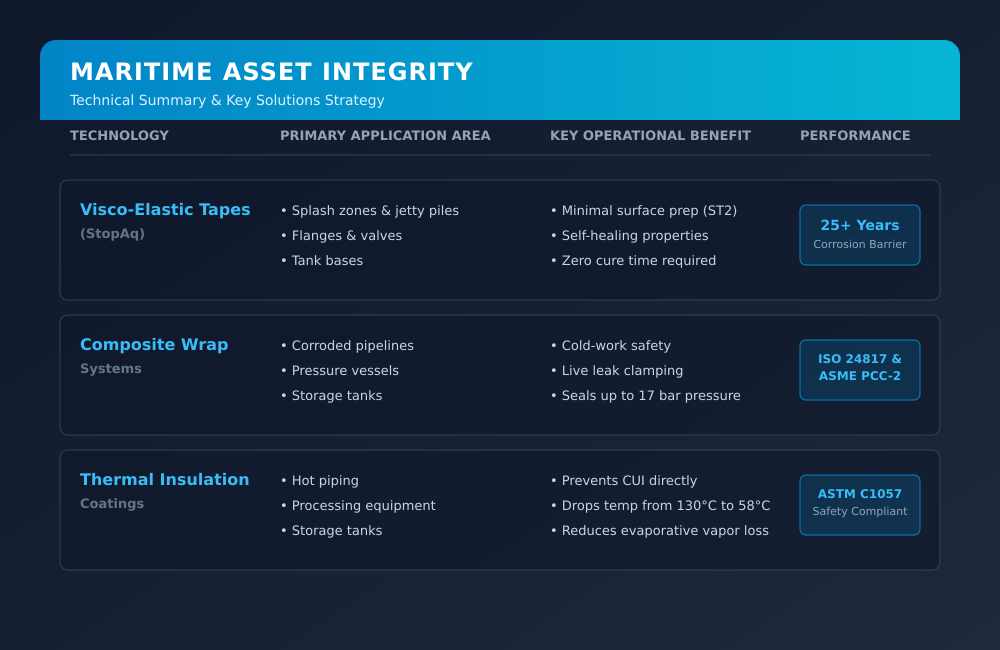
- • Minimal Surface Preparation: Operates effectively with basic ST2 hand-tool cleaning standards to remove loose rust, eliminating grit blasting requirements.
- • Self-Healing Properties: Formulated as a non-crosslinking, fully amorphous material that continuously flows into microscopic surface pores, sealing out moisture, oxygen, and microbes.
- • Zero Curing Delay: Assets can be put back into operational service immediately following application without curing wait times.
- • Substrate Versatility: Adheres reliably to dry, wet, or condensing steel surfaces, avoiding costly facility shutdowns.
- • Long-Term Protection: Delivers over 25 years of barrier protection for complex geometries including flanges, valves, jetty piles, and tank bases.
When structural thinning, cracking, or active wall loss occurs on marine pipelines, pressure vessels, or storage tanks, conventional repairs like hot work welding or full pipe replacement carry severe safety risks and lead to major operational downtime. Engineered non-metallic composite repairs utilize high-strength reinforcement fibers embedded in specialized resin matrices to restore structural integrity to damaged steel assets without interrupting plant operations.
- • Cold-Work Safety: Replaces hazardous hot work with cold-applied composite materials, preserving site safety in flammable zones.
- • Live Online Leak Sealing: Mechanical clamp systems demonstrated during the webinar can arrest active online leaks up to 17 bar.
- • Compliant Over-Wrapping: Wrapping mechanical clamps with carbon-fiber composite systems provides permanent structural repairs compliant with ISO 24817 and ASME PCC-2 standards.
- • Extended Asset Lifespan: Extends the continuous operating lifespan of rehabilitated assets by up to 20 years.
Conventional mineral or glass wool insulation systems frequently trap moisture against hot pipe walls and vessel shells, creating a severe and hidden degradation hazard known as Corrosion Under Insulation (CUI). As moisture degrades the traditional insulation material over time, energy efficiency plummets while structural failure risk rises. Spray-applied thermal insulation coatings like Mascoat DTI overcome this by creating a direct thermal barrier on the substrate surface.
- • Direct CUI Prevention: Applied directly onto prepared metal surfaces over a suitable primer, completely sealing the steel substrate from air and moisture ingress.
- • Personnel Protection: A coating layer as thin as 1 mm reduces surface temperatures from 120 degrees celsius - 130 degrees celsius down to a safe-to-touch 58.3degrees celcius, meeting ASTM C1057 safety benchmarks.
- • Vapor Loss Reduction: When applied to storage tanks holding volatile liquids (e.g., Naphtha or solvents), the thermal insulation mitigates solar heat gain, significantly reducing evaporative losses.
As India accelerates its maritime development to support growing international trade, safeguarding port infrastructure against aggressive marine environments is paramount. The insights shared during this masterclass highlight a decisive shift in asset management strategy: moving away from reactive, disruptive component replacements toward proactive, cold-applied maintenance technologies.
By integrating visco-elastic wrapping systems, engineered composite repairs, and specialized thermal insulation coatings, port operators and marine engineers can effectively stop active corrosion, maintain continuous operational flow, and protect high-value infrastructure investments for decades to come.
The event was exceptionally well attended, drawing diverse and enthusiastic participants. Throughout the session, attendees demonstrated a high level of engagement and interest. The interactive Q&A segment proved to be a highlight, generating thoughtful discussion and vibrant dialogue. Overall, the gathering received overwhelmingly positive webinar from all who participated. ______________________________________________________________________

NEWSLETTER
TRENDING ON PRO MFG

MORE FROM THE SECTION