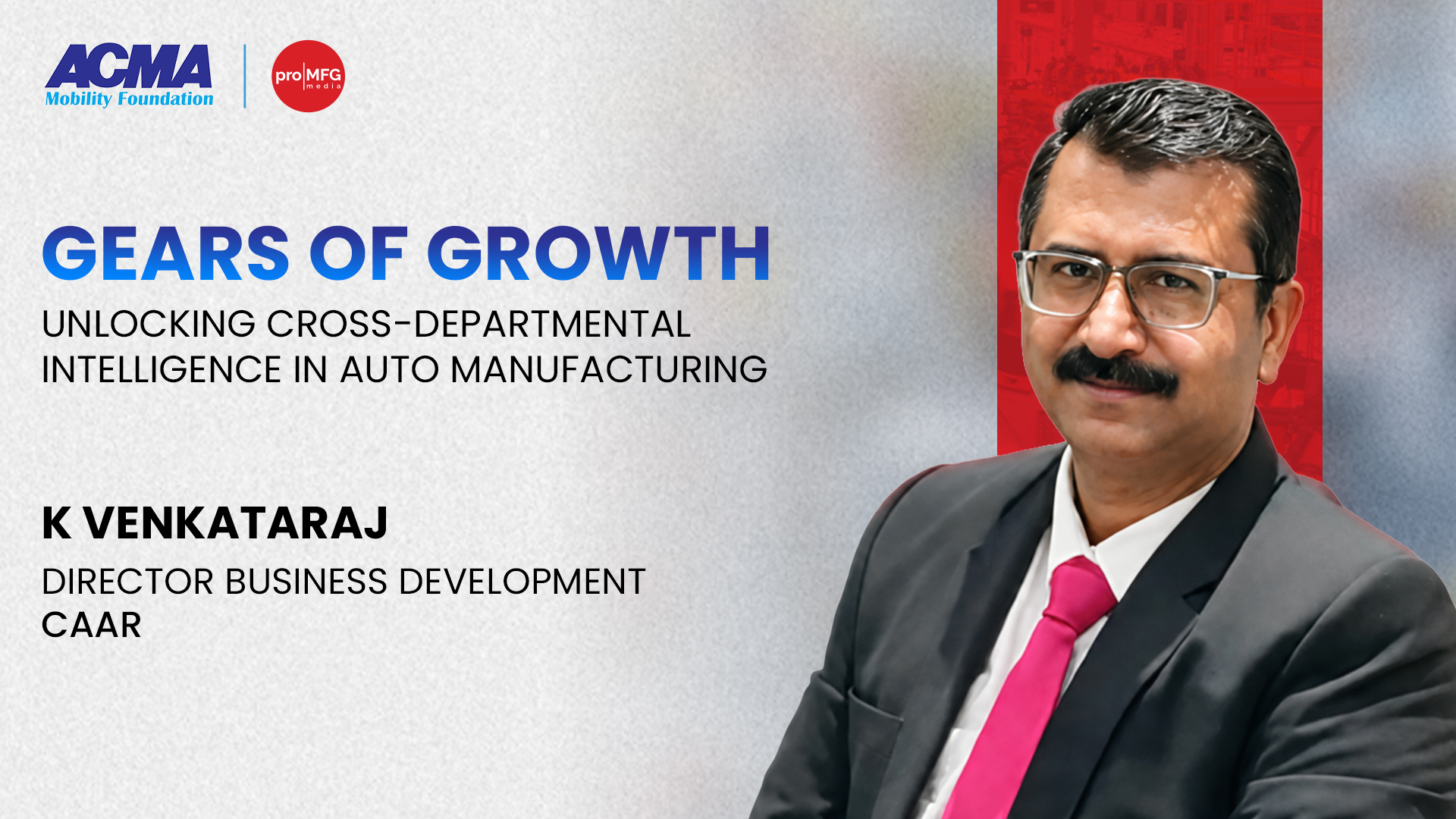
Gears of Growth: Unlocking Cross-Departmental Intelligence in Auto Manufacturing
#DigitalTransformation #ProMFGMedia #SmartManufacturing #FutureOfMobility #AutomotiveInnovation #SustainableManufacturing #Industry40 #AutomotiveLeadership #EVIndia #ACMAThinkTurf2026"AI in manufacturing shouldn't stop at office productivity or CAD design - the real shift happens when algorithms directly boost shop-floor throughput." - K Venkataraj, Director Business Development, CAAR
August 2026 : Walk through a typical automotive facility and you'll find plenty of sensors, dashboards, and pilot projects. But ask plant leadership where that operational data actually goes, and you’ll often hit an uncomfortable truth: it rarely escapes the factory walls.
At the 4th Edition of the ACMA Automotive Smart Manufacturing Think Turf 2026 powered by Pro MFG Media, industry leaders gathered under the theme Transforming Mobility: Innovation, Integration, and Impact.
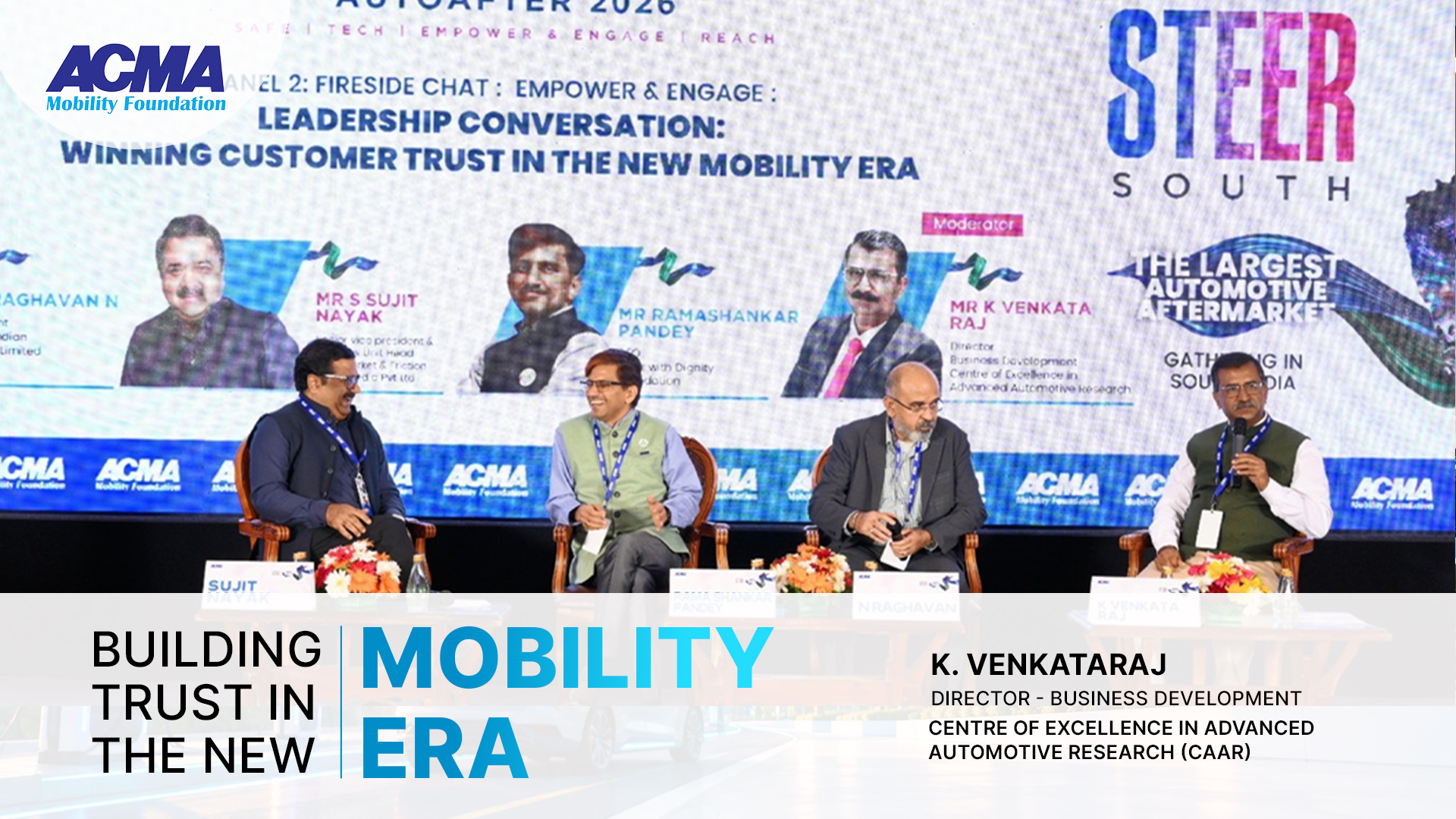
In the panel "Gears of Automotive Growth: Resilient, Automated & Intelligent Manufacturing," K Venkataraj, Director of Business Development at CAAR (Centre for Advanced Automotive Research) offered a sharp, practical breakdown of how Indian plants can stop trapped data and move smart manufacturing past isolated pilots into full-scale operations.
Here are the key takeaways from his perspective on bridging the gap between prototype and production.
1. The 3 Steps to Growth: Intelligent, Automated, Resilient
To build a resilient supply chain, Venkataraj argues you have to work backward from the ultimate goal.
- • Start with Intelligence: Deploy AI directly where parts are made - not just for back-office paperwork or generative CAD design, but for real-time shop-floor productivity.
- • Automate the Flow: Connect physical automation with actionable digital insights.
- • Build Resilience: Scaling these connected platforms across plants naturally creates a flexible, shock-resistant network.
And when it comes to the ultimate launchpad for this tech? Venkataraj shared a witty observation: "Which city speaks best to AI? It’s not Bengaluru, it’s not Pune - it’s Chen-AI."
With Tamil Nadu producing roughly 35% of India’s automotive output and hosting massive EV production hubs, the region is becoming a living laboratory for practical AI deployment on the line.
2. Appoint a "CFT Leader" to Break Data Silos
One major roadblock to scaling smart manufacturing is data hoarding. Operational metrics stay trapped inside specific departments, never making it across the campus or over to sister plants.
To solve this, Venkataraj pointed to a model used by a major European truck OEM operating in India: a dedicated Cross-Functional Team (CFT) Leader.
Instead of leaving cross-department communication to chance, this leader's sole job is to identify top-performing innovations in one group and aggressively scale them across the entire enterprise. It turns isolated "best practices" into shared company standards.
3. The 3-Pillar Culture Shift: Culture, Ventures, and Frameworks
How do you get teams to actually innovate instead of sticking to safe, repetitive tasks? Venkataraj shared a 10-second elevator pitch on how CAAR builds innovation ecosystems:
- • Culture: Dedicate protected time for creative problem-solving (even one hour a week) and bake innovation milestones directly into performance appraisals.
- • Ventures: Look outside traditional channels. Involve Tier-2 suppliers and unconventional partners who aren't traditionally tied to your core design process.
- • Frameworks (TRL 4 to 7): Moving from prototype to validated product requires structured evaluation tools like TRIZ (Theory of Inventive Problem Solving) to systematically assess risk before rolling tech onto live lines.
As CAAR supports companies from Technology Readiness Level (TRL) 4 to 7 - taking innovations from initial prototypes to validated products - the lesson for auto leaders is clear: stop treating digital tools like temporary experiments. Appoint strong cross-functional champions, liberate your plant data, and put AI to work right on the shop floor.

NEWSLETTER
TRENDING ON PRO MFG



MORE FROM THE SECTION