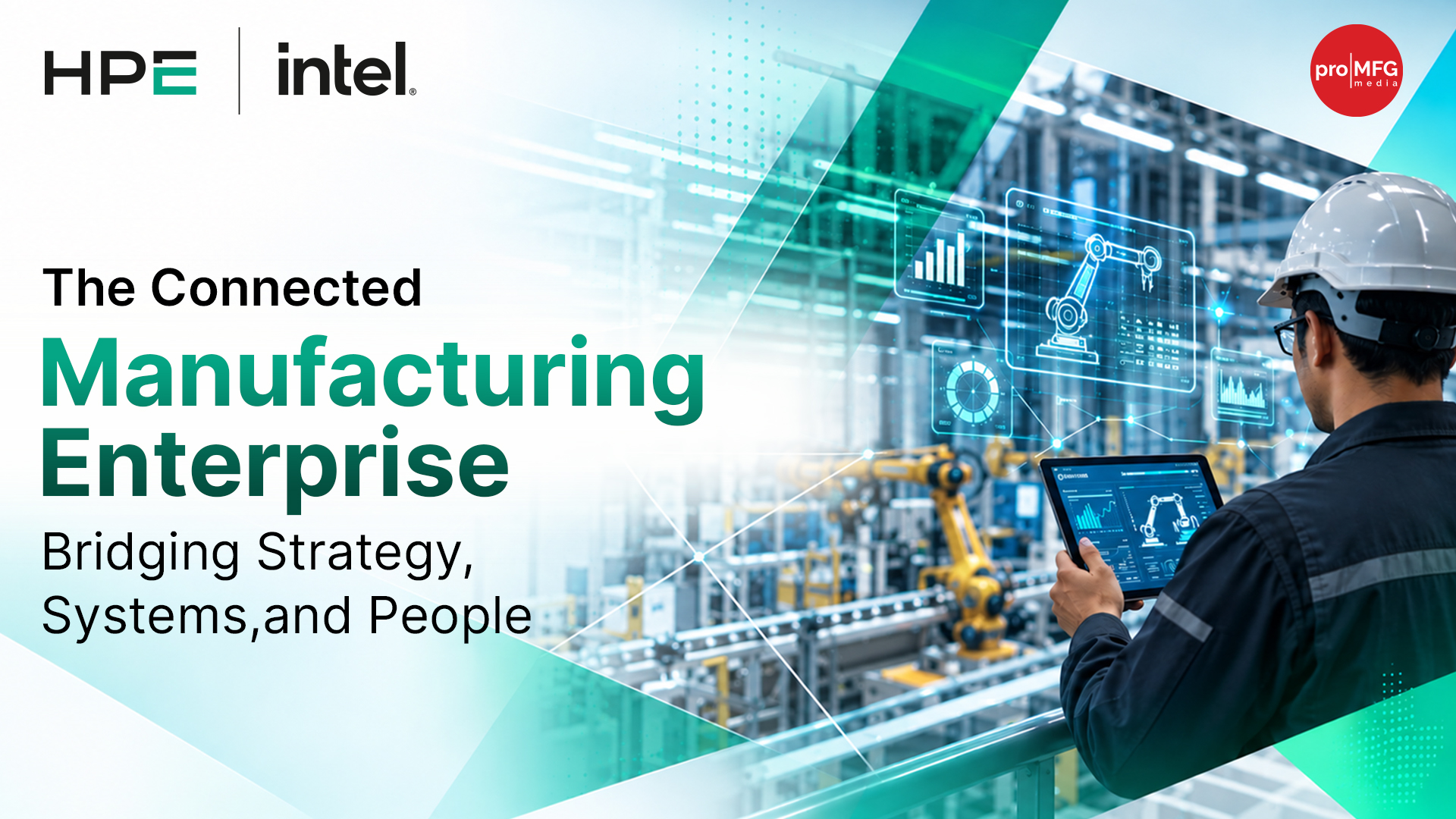
Intelligent Manufacturing in the EV Age: Data-Driven Quality from Top to Bottom
#ProMFGMedia #SmartManufacturing #FutureOfMobility #AutomotiveInnovation #SustainableManufacturing #Industry40 #AutomotiveLeadership #EVIndia #ACMAThinkTurf2026"Intelligent manufacturing isn't just about throwing automation at a line - it’s about using data to connect the corner office to the shop floor and building parts that can actually be made at scale." - Jayakumar G, Group President & Managing Director, Valeo
September 2026 : When global automotive giants first established deep roots in India, they brought two transformative lessons to the local supply chain: rigorous global quality standards and unyielding execution speed. Fast forward nearly three decades, and Indian manufacturing has mastered those mechanical fundamentals.
Today, a very different shift is underway - one defined not by mechanical gears, but by a million lines of software code, complex power electronics, and high-voltage EV powertrains.
At the 4th Edition of the ACMA Automotive Smart Manufacturing Think Turf 2026 powered by Pro MFG Media, industry leaders gathered around the theme Transforming Mobility: Innovation, Integration, and Impact.
During the panel on "Gears of Automotive Growth: Resilient, Automated & Intelligent Manufacturing," Jayakumar G, Group President & MD at Valeo delivered a realistic assessment of where India's automotive supply chain excels, where its electronic gaps remain, and why true product innovation fails without shop-floor manufacturability.
Here are the key insights from his perspective on navigating the EV and software transition.
1. Connected Visibility: From the Corner Office to the Shop Floor
For Jayakumar, smart manufacturing isn't defined by standalone robots or isolated digital tools. It comes down to data-driven connectivity.
"An executive should be able to look at plant efficiency in real time directly from their desk," Jayakumar emphasized. "Intelligent manufacturing connects top-level strategy right down to the shop floor, driving corrective actions that boost efficiency, add value, and ultimately protect profitability."
When operational data flows seamlessly across the entire organization, leadership can spot bottlenecks, track plant-wide OEE, and resolve quality issues before they impact the bottom line.
2. The Next Localization Frontier: Electronics & EV Maturity
While India has built world-class capabilities in traditional mechanical components, the shift toward software-defined vehicles (SDVs) and electric platforms has exposed new localization challenges.
"With modern vehicles running on hundreds of millions of lines of code, even a minor electronic or software defect can disable a vehicle," Jayakumar noted.
While government incentives are spurring investments in domestic electronics, building a self-sustained local ecosystem takes time. The biggest hurdle isn't Tier-1 readiness - it's developing the technical maturity and process stability of lower-tier component suppliers to ensure global quality standards across every electronic module.
3. Bridging the Gap: Design for Manufacturability (DFM)
Valeo invests heavily in global research - allocating roughly 10% of its OE sales to R&D. However, Jayakumar highlighted a common pitfall when localizing high-tech components: R&D teams designing products at their desks without considering shop-floor reality.
An engineer might create a part that meets strict noise, vibration, and harshness (NVH) or leak-proof specs, but if local suppliers cannot manufacture those tight tolerances at speed, the design fails in production.
To solve this, organizations must bridge the gap between R&D, supplier quality engineering, and industrial operations:
- • Involve Process Experts Early: Pair R&D designers with supplier quality engineers who understand real-world manufacturing limits.
- • Optimize Tolerances Jointly: Test and validate concentricity, co-axiality, and tolerances before finalizing the design.
- • Protect Cycle Times: Ensure the product can be manufactured consistently at scale without bottlenecking line speed.
"You need deep expertise at every level - R&D, industrialization, and supplier domain development - working together to make sure a design can actually be built efficiently on the floor," Jayakumar explained.
As India cements its role as a global mobility hub, winning the next decade will require more than just assembling mechanical parts. It demands mastering complex electronics, closing the R&D-to-shop-floor loop, and using real-time data to keep every plant running at peak efficiency.

NEWSLETTER
TRENDING ON PRO MFG

MORE FROM THE SECTION