Rethinking Industrial Intelligence: Decision Velocity, Hybrid Clouds, and the ERP vs. Excel Dilemma
#ProMFGMedia #SmartManufacturing #DassaultSystèmes #CloudSecurity #TataTechnologies #Industry40 #SupplyChainVisibility #PricolLimited #DecisionVelocity #DataDrivenManufacturing“A ship isn’t built to stay safe in the harbor - it’s built to navigate the open sea. Moving to the cloud and automating your shop floor carries risk, but holding back on data velocity is the biggest gamble of all.” - Srikrishna Narasimhan, Pricol Limited
September 2026 : In modern manufacturing, competitive advantage is no longer determined solely by how fast a factory produces or delivers goods. Instead, the ultimate edge lies in decision velocity - how rapidly and accurately an organization translates operational data into strategic action.
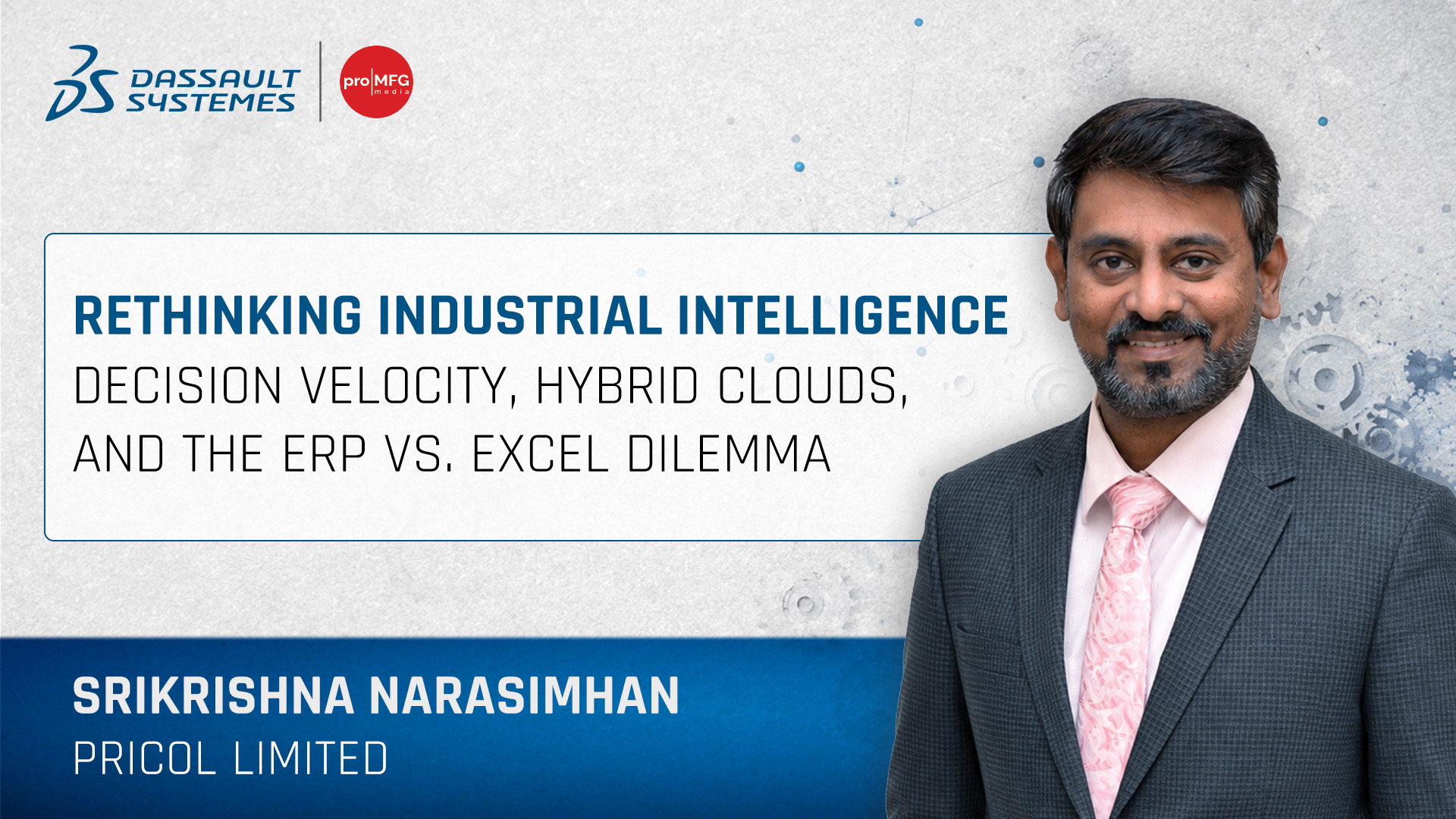
At the “Driving Profitable Growth Through Smart Manufacturing” roundtable - presented by Dassault Systèmes and Tata Technologies, powered by Pro MFG Media, and supported by ACMA India - Srikrishna Narasimhan from Pricol Limited offered a sharp, refreshing perspective on smart operations. From balancing cloud security to understanding why shop-floor teams cling to Excel spreadsheets, Narasimhan’s insights reframed how industrial leaders should approach digital transformation.
As digital ecosystems expand, data security remains a top concern for manufacturing leadership. While some enterprises hesitate to move off-premise, keeping systems entirely local limits real-time collaboration with customers and suppliers.
Pricol approaches cloud architecture with clear boundaries:
- • Customer-Facing Systems (External Cloud): B2C portals and external client touchpoints run on secure cloud channels to ensure fast accessibility and continuous uptime.
- • Core Factory Operations (Internal Campus): Sensitive operational data, proprietary design files, and internal plant metrics remain safely secured within campus network boundaries.
This hybrid model allows enterprises to harness the cloud's power for customer engagement while safeguarding core operational intelligence.
A common frustration among industrial executives is seeing operators default to Excel spreadsheets despite massive investments in Enterprise Resource Planning (ERP) software. Rather than blaming shop-floor teams for resisting technology, Narasimhan pointed out the root cause: data flow gaps.
When a supplier delivery is delayed, teams on the ground know about it immediately, but the central ERP often fails to reflect the change. To keep production moving, operators create shadow spreadsheets. Excel isn’t the problem - stale system data is. When ERPs capture real-time shop-floor realities, spreadsheets naturally disappear.
While many manufacturers implement AI solely for machine health checks, true predictive manufacturing extends across the entire value chain.
By connecting real-time customer demand forecasts directly to plant capacity, raw material procurement, and automated inline quality testing, factories shift from reactive firefighting to proactive execution.
Furthermore, designing intuitive software workflows ensures that complex decisions happen seamlessly on the backend - allowing floor operators to focus on execution rather than system navigation.
Smart manufacturing isn't about collecting data for storage - it’s about accelerating decision velocity. By adopting a pragmatic hybrid cloud strategy, fixing systemic data flow gaps, and aligning AI predictions directly with customer demand, manufacturers can turn floor-level intelligence into sustainable profitability.

NEWSLETTER
TRENDING ON PRO MFG



MORE FROM THE SECTION