The Leapfrog Moment: Physical AI trends to watch out for in 2026
#PhysicalAI #TheLeapfrogMoment #Industry40 #EdgeAI #GreenTech #EmbeddedSystems #Robotics2026 #WorkforceTransformation #DataPrivacy #SiMaAI
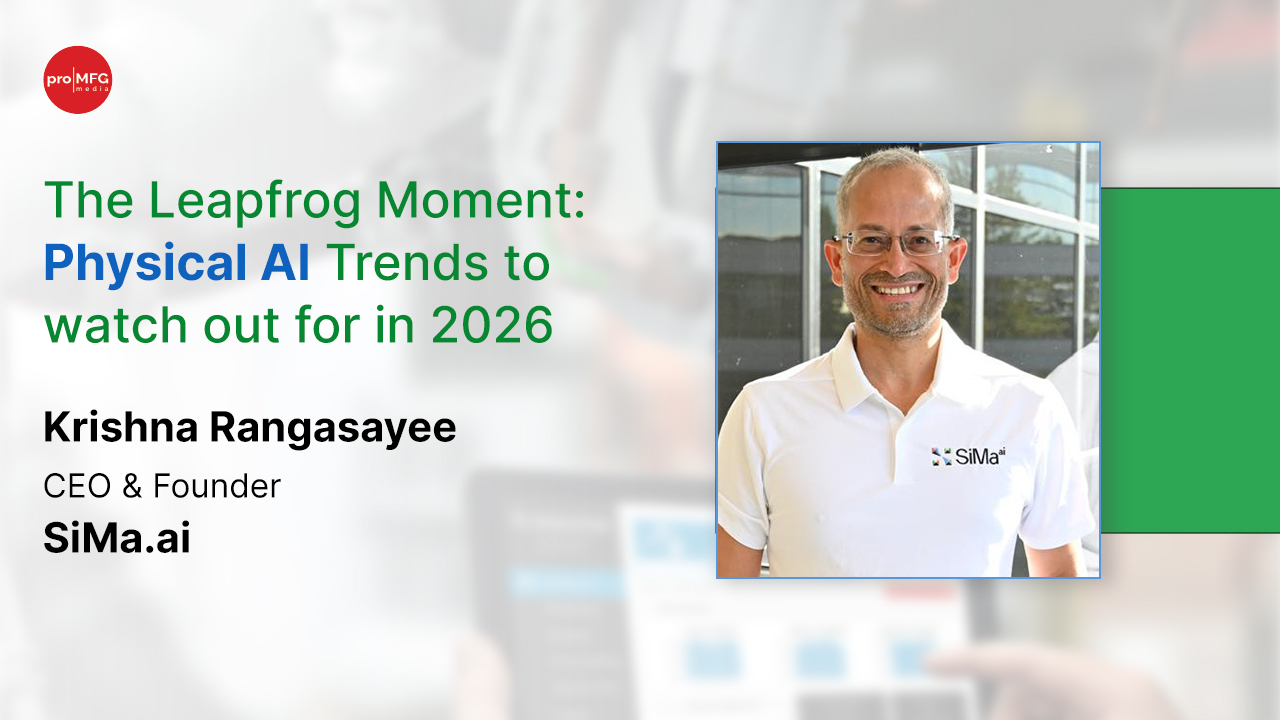
January 2026 : In 2026, the artificial intelligence landscape is undergoing a monumental shift from the digital cloud to the tangible, physical world. This transition, termed the "Physical AI leapfrog," represents the integration of state-of-the-art perception and reasoning models directly into the hardware we use every day - from home appliances to industrial robots. By moving AI on-device and operating within strict power budgets, industries are now able to unlock real-time automation and predictive capabilities that were previously impossible due to latency and connectivity constraints.
The Leapfrog Developments That Will Accelerate Physical AI Adoption in 2026
General-purpose physical AI models on-device optimized for tiny power budgets will make it possible to run GPT-class or state-of-the-art perception models on less than 10W of hardware, which changes everything. Plug-and-play model deployment that eliminates MLOps and model engineering will make AI adoption as simple as buying a sensor. Governments will also increasingly require sensitive perception to remain local, creating regulatory pressure for on-device privacy.
Physical AI Won't Eliminate Workers-It Will Eliminate Tasks
Physical AI will automate repetitive, high-fatigue, or high-risk work first. This will shift frontline roles toward AI-supervised operations, workflow orchestration, quality oversight, field robotics maintenance, and data and model management at the on-device. These new roles are higher-skill and safer, reducing dangerous jobs while increasing technical opportunities. As organizations navigate this shift, the real competitive advantage will go to those that prepare their workforce for these changing responsibilities.
Training Will Center on Workflow Integration, Not AI Theory
Factory technicians will learn how to operate and supervise autonomous inspection or pick-and-place systems. Retail staff will learn how to interact with autonomous shelf-scanning robots or checkout systems. Fleet operators will learn predictive routing and maintenance tools powered by perception. The biggest change is that training will shift from "coding & data science" to "how to operate AI-driven machines," creating an entirely new baseline for workforce readiness.
Three Ways Physical AI Will Redefine Daily Life, Consumer Experiences, and the Way Cities and Homes Operate
By 2026, homes, appliances, and public spaces will have on-device perception that understands activities in real time-adjusting lighting, detecting safety issues, optimizing energy use, and personalizing experiences without sending data to the cloud. Physical systems-from HVACs to home robots to city traffic flows-will anticipate needs instead of reacting, making predictive maintenance, predictive congestion routing, and predictive energy optimization standard features.
Physical AI will shift from being a tool to being a partner, as consumer robots, mobility aids, and smart appliances understand context and autonomy, performing real tasks rather than following scripts. Conversational AI will power this shift and become mainstream, creating new levels of seamless human-machine collaboration.
First Big Breakthroughs Outside Traditional Industrial Applications
Healthcare delivery will adopt physical AI through low-cost diagnostic devices, bedside monitors, and autonomous hospital logistics. Retail operations will use frictionless checkout, shelf inventory systems, loss-prevention tools, and in-store robotics running fully on-device. Agriculture will deploy on-device-native perception to enable autonomous sprayers, pollination drones, and harvest robots. These sectors will experience some of the earliest-and most visible-benefits of physical AI in 2026.
The Rise of Autonomous Small Machines
Forklifts, pickers, agricultural platforms, delivery robots, and consumer devices will all gain real perception on less than 10W. This unlocks a new class of autonomous small machines that operate safely, efficiently, and independently. These systems can function without cloud access and can be deployed in environments where power and connectivity constraints previously made AI impossible. As a result, autonomous small machines will become one of the most significant product categories transformed by physical AI in 2026.
Conclusion
The shift toward Physical AI is one of the most important transformations since the emergence of cloud computing. Organizations that embrace these changes early will define the next era of intelligent systems. 2026 is the year this transition becomes impossible to ignore, and the advantages will accrue immediately to those ready to act.
Krishna Rangasayee is the CEO and Founder of SiMa.ai, a company at the forefront of scaling Physical AI through purpose-built, software-centric machine learning platforms. He previously served as the COO of Groq and spent 18 years at Xilinx, where he rose to Executive Vice President of Global Sales. With over 25 international patents to his name and an educational background from NIT Warangal and Mississippi State University, Rangasayee is a recognized leader in bringing energy-efficient, high-performance AI to the embedded edge.

NEWSLETTER
TRENDING ON PRO MFG


MORE FROM THE SECTION