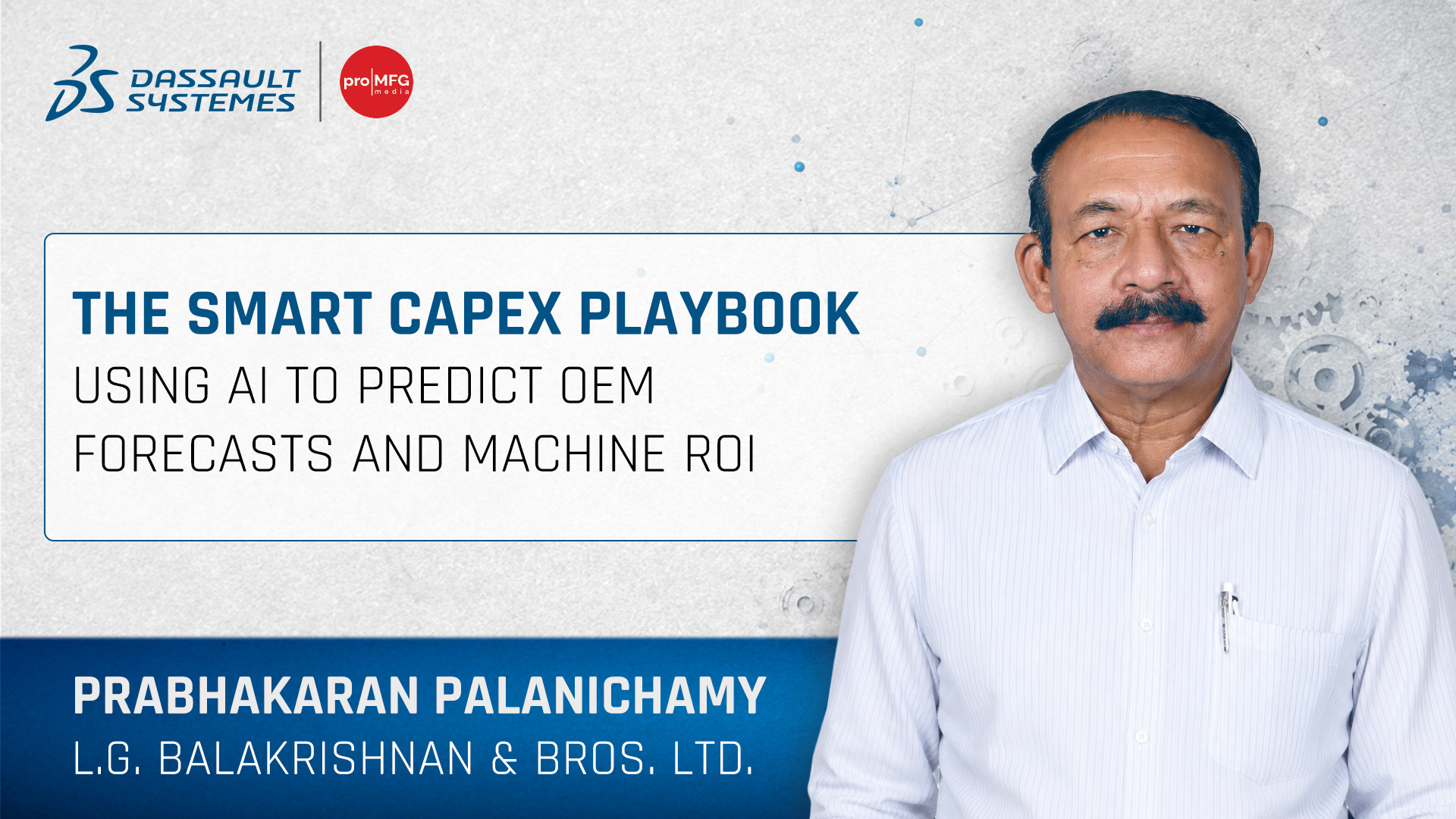
The Smart CapEx Playbook: Using AI to Predict OEM Forecasts and Machine ROI
#ProMFGMedia #SmartManufacturing #Operationalexcellence #DassaultSystèmes #TataTechnologies #Industry40 #CyberResilience #CapExStrategy #DemandForecasting“Leadership is about stepping directly into the storm. In a hyper-connected world, operational resilience isn't just about buying technology - it's about anticipating geopolitical shocks, securing your cloud, and proving real ROI.” - Prabhakaran Palanichamy, L.G. Balakrishnan & Bros. Ltd.
September 2026 : When manufacturing executives talk about digital transformation, the conversation often revolves around idealized scenarios: seamless cloud migrations, predictive algorithms, and fully automated shop floors. But in the real world, industrial operations are routinely hit by unpredictable external shocks - from sudden cyber-attacks and regional election migrations to volatile OEM forecasts.
At the “Driving Profitable Growth Through Smart Manufacturing” roundtable - presented by Dassault Systèmes and Tata Technologies, powered by Pro MFG Media, and supported by ACMA India - Prabhakaran Palanichamy from L.G. Balakrishnan & Bros. Ltd. brought a sharp, highly humanized reality check to the stage. Recalling a memorable lesson in hands-on leadership from Ratan Tata himself, Palanichamy illustrated how modern plant heads must navigate a complex web of digital risk, human logistics, and capital expenditure (CapEx) hurdles.
Modern manufacturing lines do not operate in a vacuum. A disruption anywhere in the ecosystem creates an immediate ripple effect across plant operations.
Palanichamy shared how regional dynamics unexpectedly impacted factory output. During a major election season in West Bengal, plants suddenly faced an unexpected surge in absenteeism, revealing that a significant portion of their workforce hailed from regions not previously tracked on management radar.
"I realized I needed a regional census on my table," Palanichamy noted, "so we could map upcoming regional elections and proactively prepare for labor fluctuations before they hit our assembly lines."
As factories integrate into customer portals, cybersecurity is no longer just an IT issue—it is a core operational requirement. When a major customer portal suffers a ransomware attack, or when internal systems face threat actors like Medusa, entire invoicing, billing, and Dispatch Control (DC) processes grind to a halt.
While shifting to the cloud and securing cyber-attack insurance significantly mitigates vulnerability, it requires overcoming internal hesitation and bridging the knowledge gap across traditional engineering teams. Building true cyber resilience means hardening digital infrastructure without halting daily customer dispatches.
For traditional financial controllers ("the bean counters"), approving major technology investments requires rock-solid ROI projections. Yet, relying solely on volatile OEM-provided forecasts often leads to mismatched capacity planning.
Palanichamy proposed a transformative vision for Artificial Intelligence in capital planning: using AI models to independently simulate market demand, raw material trends, and machinery procurement.
"Imagine an AI system that reads a component drawing, assesses if your current machine fleet can produce it, identifies missing machine specs, and instantly projects delivery times and CapEx costs on one screen. That is where AI delivers true strategic value."
Smart manufacturing goes far beyond adopting digital dashboards. It demands leadership that can withstand real-world crises - whether navigating cyber threats, managing workforce demographics, or leveraging predictive AI to justify CapEx investments. By mastering both digital resilience and grounded shop-floor discipline, manufacturers can secure consistent, profitable growth.

NEWSLETTER
TRENDING ON PRO MFG

MORE FROM THE SECTION