Dr. Shankar Venugopal on Demystifying Open Innovation in the EV Era
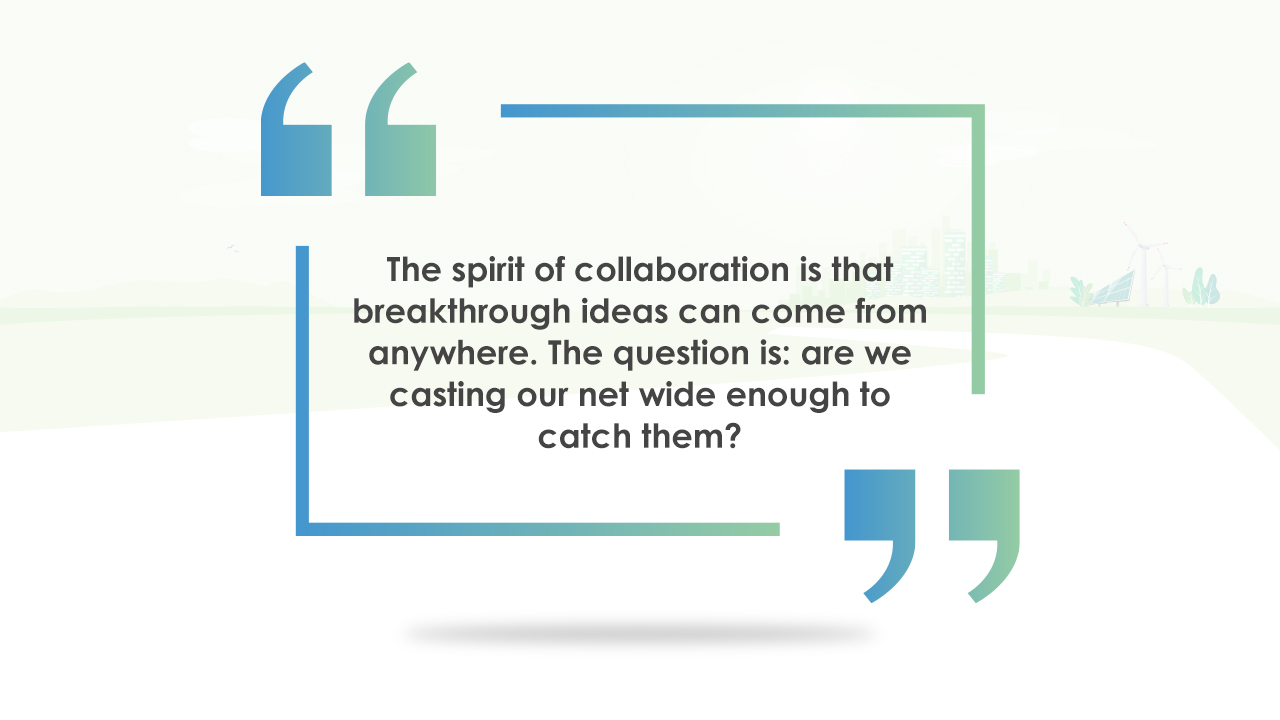
#SmartManufacturing2026 #EVInnovation #Lightweighting #OpenInnovation #AutomotiveEngineering #Sustainability #MahindraRise #CoCreation #FutureOfMobility #ACMA2026"The spirit of collaboration is that breakthrough ideas can come from anywhere. The question is: are we casting our net wide enough to catch them?" - Dr. Shankar Venugopal, Vice President, Mahindra & Mahindra
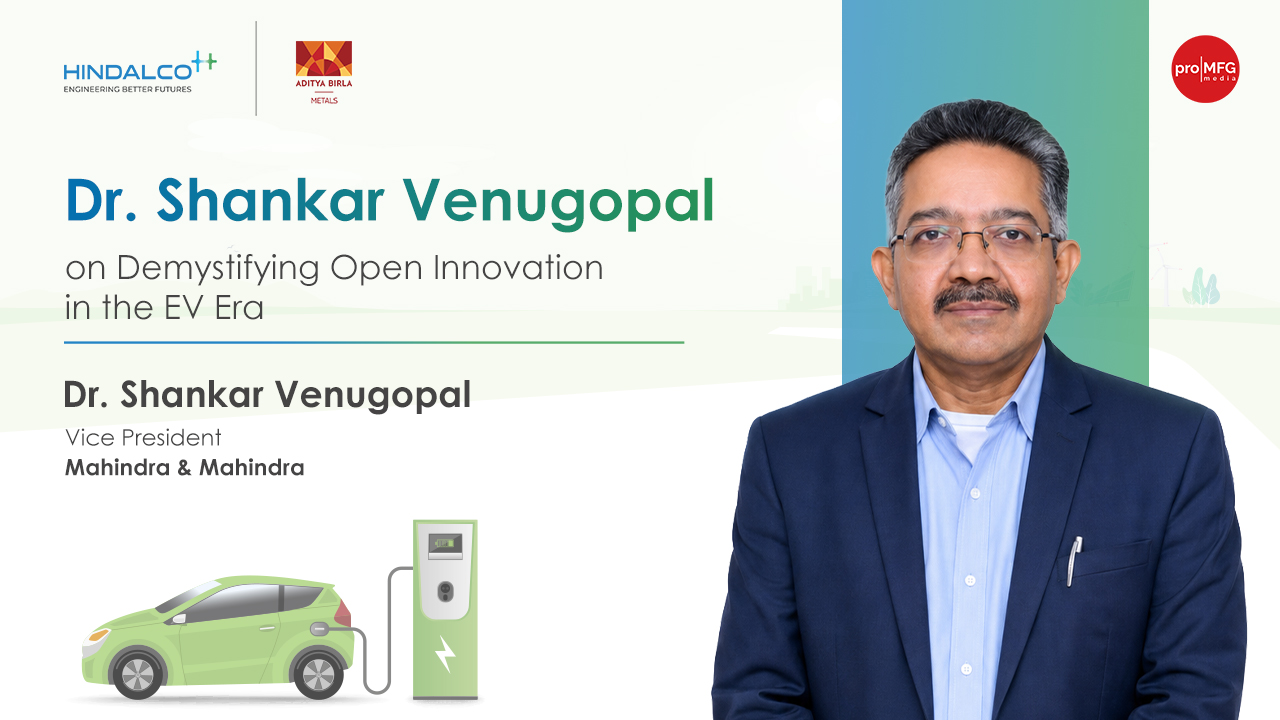
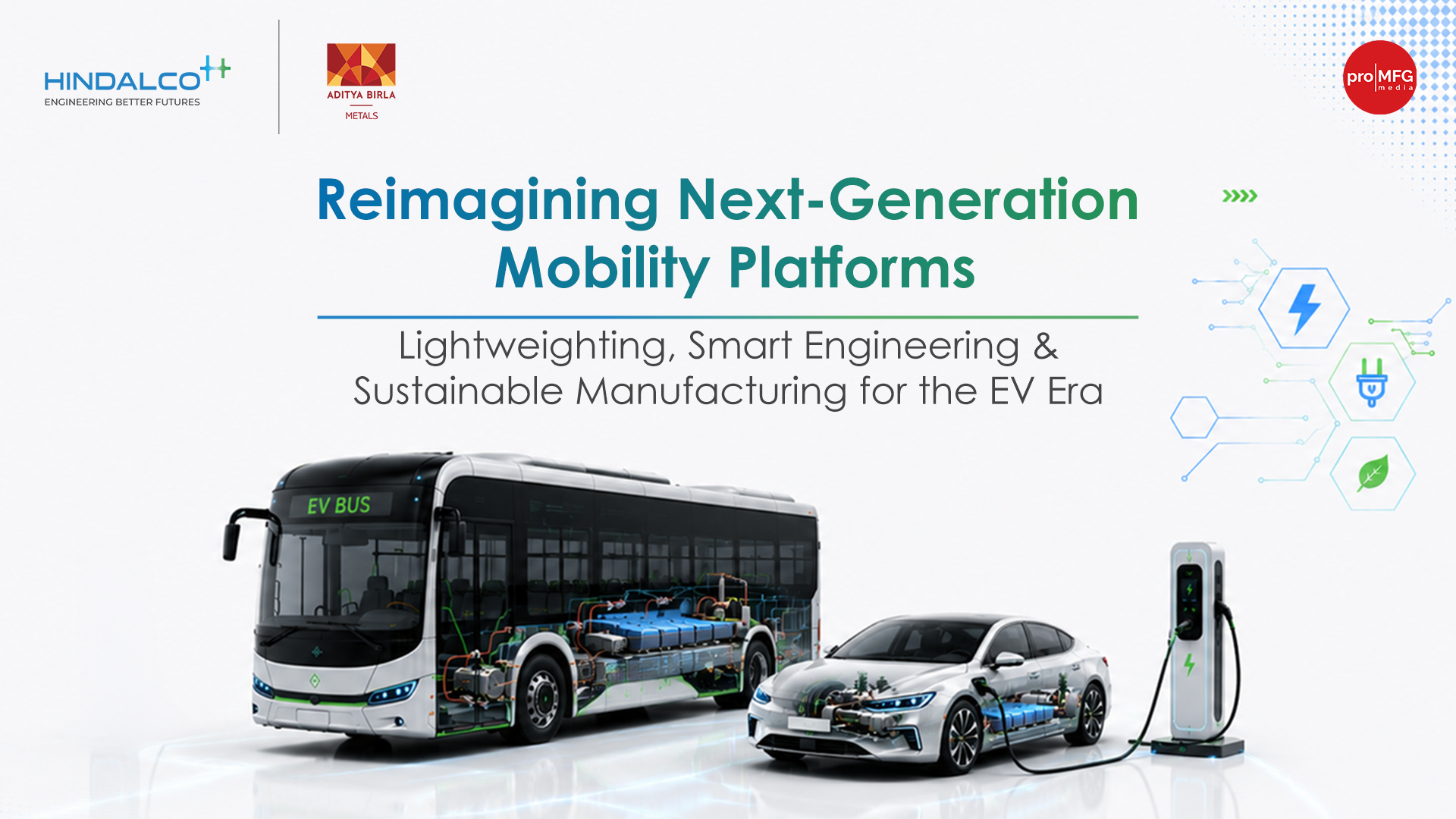
June 2026 : Great things happen when brilliant minds gather into a room, but extraordinary things happen when you open the doors to the rest of the world. Speaking at Hindalco CXO Power Breakfast - held on the sidelines of the 4th Edition of the ACMA Automotive Smart Manufacturing Think Turf 2026 - Dr. Shankar Venugopal, Vice President at Mahindra & Mahindra, challenged the industry to look beyond traditional R&D boundaries. The roundtable, powered by Pro MFG Media alongside knowledge partners CAAR and GARC, gathered top leaders to tackle a massive mandate: Reimagining Next Generation Mobility Platforms through Lightweighting, Smart Engineering, and Sustainable Manufacturing.
For Dr. Venugopal, achieving these aggressive targets requires a profound shift in how the automotive ecosystem innovates. He argues that having a common roadmap with quantified, shared goals is an excellent starting point, but the real magic happens when organizations possess the patience and collective will to cast their nets wider than ever before.
To illustrate his point, Dr. Venugopal shares a powerful story from his earlier days at GE during their "eco-imagination" drive. The corporate challenge was seemingly simple: reduce the weight of a humble aircraft bracket. Internal experts, including Nobel laureates, believed even a 20% weight reduction was nearly impossible because "everything that could be done had already been done." Yet, when GE opened an online portal and offered a modest $10,000 prize to the public, the winning idea didn’t come from a massive tech hub. It came from M Arie Kurniawan, a lone inventor sitting in a remote corner of Indonesia. His design achieved a staggering 80% weight reduction.
"Imagine how many brackets go into an aircraft, and what an 80% reduction means," Dr. Venugopal emphasizes. This story carries a vital lesson for the Indian automotive sector as it chases an ambitious 35% weight reduction for EV battery packs by 2035. Incredible ideas are sitting in raw, uncultivated spaces. Dr. Venugopal stresses that it is the industry's responsibility to systematically incubate these raw concepts into production-ready realities. Landmark initiatives like the Mahindra RISE Prize for EVs and autonomous vehicles prove that India is ready to launch an equally massive challenge focused entirely on pre-competitive lightweighting research.
Innovation cannot happen in a silo, nor can it be treated as a linear relay race. Dr. Venugopal notes that traditionally, designers created a shape and then experimented with different materials. Today, that approach is obsolete.
To thrive in a market where new product development cycles have collapsed to just one year, Dr. Venugopal outlines three interconnected pillars that must be mastered right at the start:
- Material-First Awareness: Designers must understand a material’s unique DNA and performance characteristics before drawing the first line.
- AI-Assisted Heritage: Instead of running endless new iterations, engineers should leverage AI assistants to extract essential elements from past designs, leaving human minds free to focus strictly on fine-tuning.
- The Cross-Functional Stage: At Mahindra, Dr. Venugopal explains, material scientists, design engineers, and manufacturing experts always share the stage from day one. This cross-functional alignment ensures early-stage manufacturability before wasting valuable time.
The human brain stretches to do the impossible when high-stakes competition is introduced - a phenomenon Dr. Venugopal notes has been proven repeatedly in the realm of Software-Defined Vehicles (SDVs). Now, he believes it is time to bring that same radical, open-source agility to hardware and teardown parts.
He points to India’s first quantum computer built in Amaravati as the perfect blueprint. Globally, advanced hardware has always been a "closed box" - open it, and you void the warranty. By taking an entirely open-source approach where different hardware parts came from different people, the Amravati project built a low-cost, easily replicable system. The automotive sector must adopt this exact philosophy to democratize hardware innovation.
Ultimately, Dr. Venugopal warns against letting inspiring roundtable discussions end when the coffee gets cold. "Let's make a difference today by just capturing what are meaningful next steps for us," he urges.
The pieces of this collaborative puzzle are already coming together. Through partnerships with institutions like IIT Madras (via CAAR) and international collaborators like Deakin University, the industry is connecting global research with local applications.
Decades ago, the US government-backed Super Truck project successfully brought industry, academia, and national labs together to achieve what seemed impossible. Dr. Venugopal believes it is time to launch an equivalent Super Truck Challenge right here in India. By establishing common targets, pulling down corporate walls, and backing raw ideas with collective incubation, the Indian automotive industry won’t just adapt to the EV era - it will lead it.

NEWSLETTER
TRENDING ON PRO MFG


MORE FROM THE SECTION