From Shop Floor to Control Room: Redefining the Industrial Soul
#DXLeadership #ManufacturingExcellence #Industry40 #FutureOfWork #DigitalTransformation #SmartFactory #DelphiTVS #ImageGraphix #ProMFGMedia #AIinManufacturing #SystemIntegration“The ultimate goal is to make the factory floor feel like an IT suite - where we aren't just moving metal, but managing a symphony of data from a seat of control.”
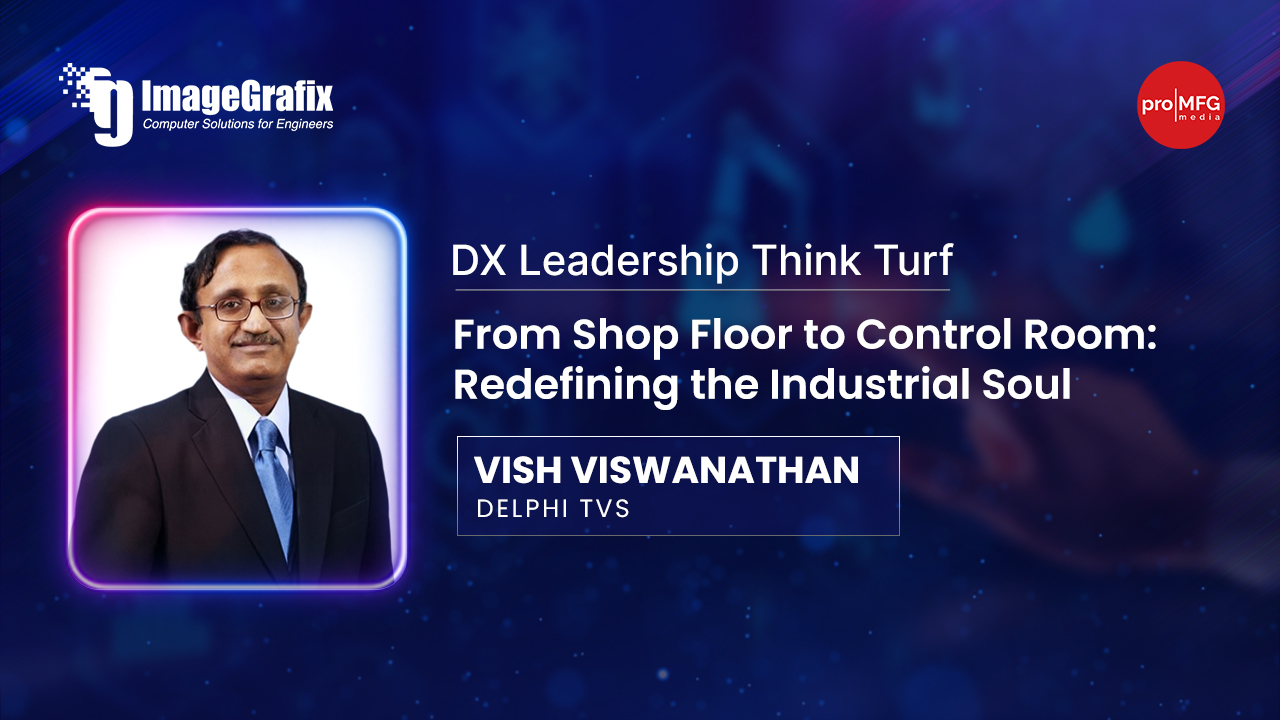
March 2026 : In the quiet, high-precision world of fuel injection equipment, Vish Viswanathan and his team at Delphi TVS are doing more than just manufacturing parts; they are conducting a quiet revolution. At the DX Leadership Think Turf Roundtable hosted by ImageGraphix and powered by Pro MFG Media, the conversation moved past the usual technical jargon. Led by Vish’s 35-year perspective, the dialogue centered on a profound shift: transforming manufacturing from a "manual labor" industry into a high-tech, "remote-controlled" powerhouse.
The theme, “Digital Leadership in Manufacturing: From Connected Assets to Intelligent Enterprises,” served as the perfect backdrop for Vish to share how digital tools are fundamentally altering the DNA of the automotive sector.
When asked to define digital transformation, Vish avoided the textbook answers. To him, it is a tool for total metamorphosis. "It’s about using digital tools to transform the way you work, look at data, decide things, and the speed at which you respond to the world," he explained. While improvements in speed and quality are the obvious wins - such as vision-based inspection outperforming the human eye - Vish pointed to the "Single Source of Truth." In a digital enterprise, the time wasted reconciling different spreadsheets disappears. There is one data source, and everyone abides by it. It’s an intangible benefit that creates a tangible competitive edge.
Perhaps the most human element of Vish’s talk was his address of the manufacturing talent gap. Today’s engineering students are quick to raise their hands for IT jobs, but slow to consider the factory floor. Vish’s solution? Change the environment. Drawing a parallel to his early days in petrochemicals - where Distributed Digital Control Systems (DDCS) allowed teams to manage massive plants from a central room - he envisions a future where automotive factories operate similarly. By digitizing the shop floor, manufacturing becomes "white-collar friendly." It shifts the role from manual intervention to high-level system management, making it an attractive career path for the digital-native generation.
Looking toward the next 24 to 36 months, Vish identified three critical capabilities that every leader must build:
1. AI Integration: Artificial Intelligence will dominate the landscape, moving from a "nice-to-have" to the primary engine of decision-making.
2. System Integration Expertise: The opportunity to connect disparate systems is still "substantially under-realized." We need architects who can make the whole enterprise talk to itself.
3. Advanced Data Analytics: Having data is one thing; having the expertise to extract actionable wisdom from it is where the real value lies.
Vish concluded with a word of caution: transformation isn't an overnight switch. It requires organizational bandwidth, careful budgeting, and a commitment to learning from pilots. It is a sequence of deliberate steps toward a more flexible, faster, and more human-friendly future.
Through the insights shared at the ImageGraphix roundtable, it’s clear that leaders like Vish are not just building fuel systems; they are building the "Intelligent Enterprises" of tomorrow.

NEWSLETTER
TRENDING ON PRO MFG


MORE FROM THE SECTION