Strong Building, Weak Basement: The Culture Crisis in Modern Manufacturing
#Leadership #DigitalTransformation #ProMFGMedia #SmartManufacturing #Operationalexcellence #DassaultSystèmes #TataTechnologies #Industry40 #DataIntegrity #CultureInTech“If you disable Excel inside an organization, smart manufacturing will actually happen. The basement of tech transformation isn't software - its culture and data integrity.” - Muthu Sekkar PL, Rotomotive Powerdrives
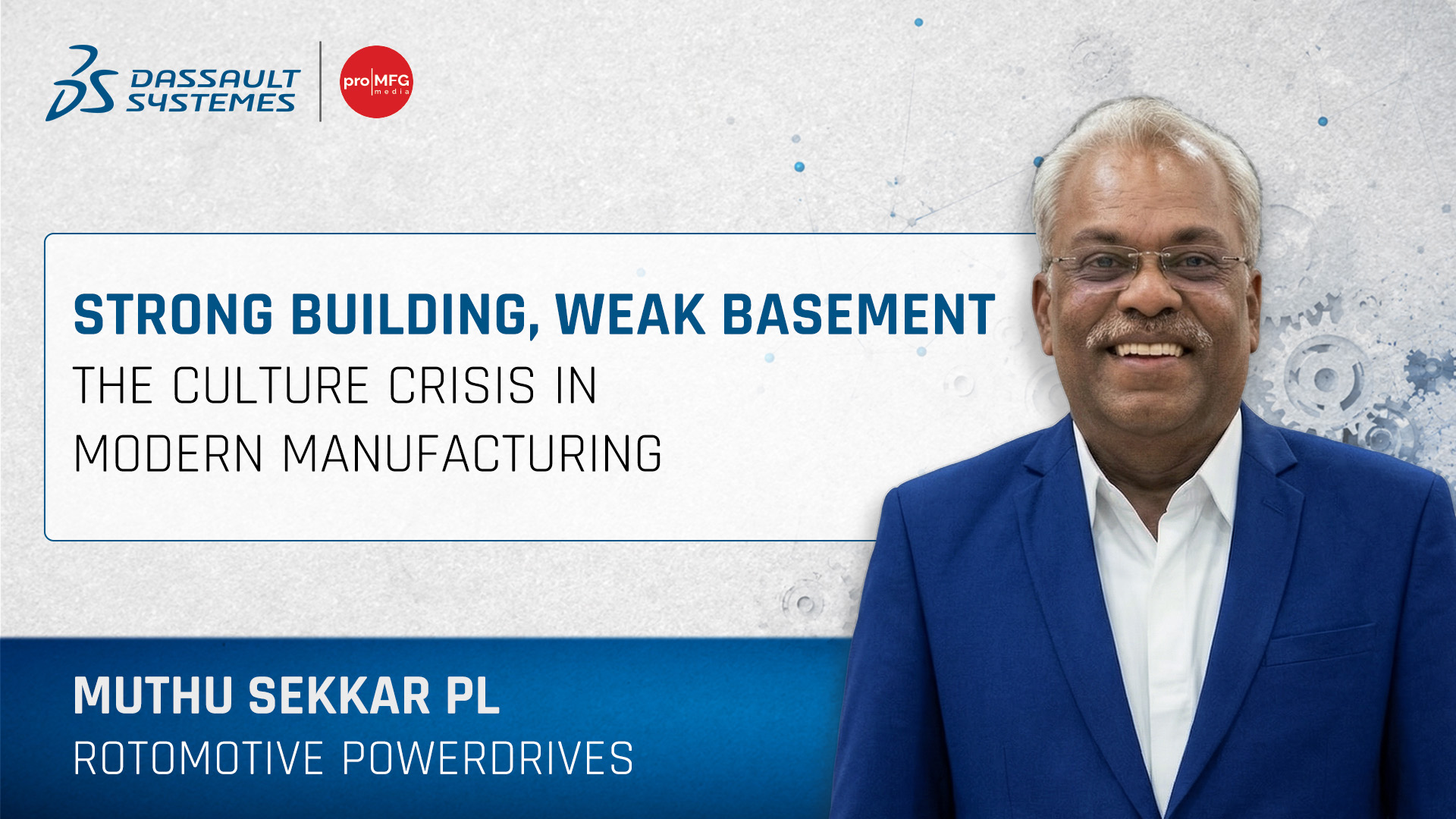
September 2026 : In an age dominated by cloud computing, real-time IoT feeds, and autonomous robotics, the industrial world harbors a dirty secret: vast swathes of global manufacturing still run on end-of-week spreadsheet updates.
At the “Driving Profitable Growth Through Smart Manufacturing” roundtable - presented by Dassault Systèmes and Tata Technologies, powered by Pro MFG Media, and supported by ACMA India - Muthu Sekkar PL from Rotomotive Powerdrives delivered a provocative, unfiltered perspective on industrial technology. Having witnessed manufacturing evolve since 1986 - from the era of telex machines and post office phone booths to modern digital control rooms - Sekkar argued that the biggest roadblock to Industry 4.0 isn't budget or software availability. It’s organizational culture and an over-reliance on legacy desktop tools.
While German, Japanese, and Chinese manufacturing models are defined by rigid, deeply ingrained work cultures, modern industrial enterprises face an evolving human challenge.
Sekkar pointed out a growing disconnect on factory floors: despite Indian leaders heading some of the largest global corporations, core shop-floor engagement, long-term organizational loyalty, and hands-on passion are slipping among younger workforces.
"You can have the best technology and the most wonderful digital systems," Sekkar observed, "but if the human foundation is weak, you're building a palace on sand. The basement has to match the structure."
Smart systems like Artificial Intelligence and Machine Learning require continuous, high-fidelity data streams to deliver ROI. Yet, in practice, many plants operate on delayed manual inputs.
Sales teams update their CRMs once a week on Friday evenings, while floor supervisors rely on data entry operators to log daily production metrics after shifts have already closed. This batch-entry habit starves real-time analytics engines of the very data they need to make automated decisions, turning expensive digital platforms into reactive reporting tools.
When asked what single step enterprise leaders should take to accelerate digital maturity, Sekkar offered a radical, one-line solution: disable Microsoft Excel.
"If you want smart manufacturing to happen, disable Excel inside your organization. It’s like a cockroach - no matter what enterprise systems you deploy, people always default back to it."
While spreadsheets are versatile, they create isolated data silos, encourage manual manipulation, and prevent real-time integration across production, quality, and supply chain functions. As long as teams can fall back on local spreadsheets, true automated connectivity will remain a distant goal.
Smart manufacturing isn't achieved by simply buying a software license or installing a digital dashboard. It requires a deliberate cultural shift toward real-time operational discipline and the courage to phase out legacy workarounds. Only when organizations fix the cultural basement and mandate live digital workflows can modern smart manufacturing deliver true, profitable growth.

NEWSLETTER
TRENDING ON PRO MFG
MORE FROM THE SECTION