When One Size Fits None: The Realities of High-Mix, Low-Volume Smart Factories
#SkilledWorkforce #ProMFGMedia #SmartManufacturing #Operationalexcellence #DassaultSystèmes #ProjectManagement #TataTechnologies #Industry40 #LauritzKnudsen #EngineertoOrder“In bespoke manufacturing, dark factories are a distant fantasy. The secret isn't replacing human hands - it's empowering them with early-stage project intelligence.” - Mohan Surendran, Lauritz Knudsen Electrical & Automation
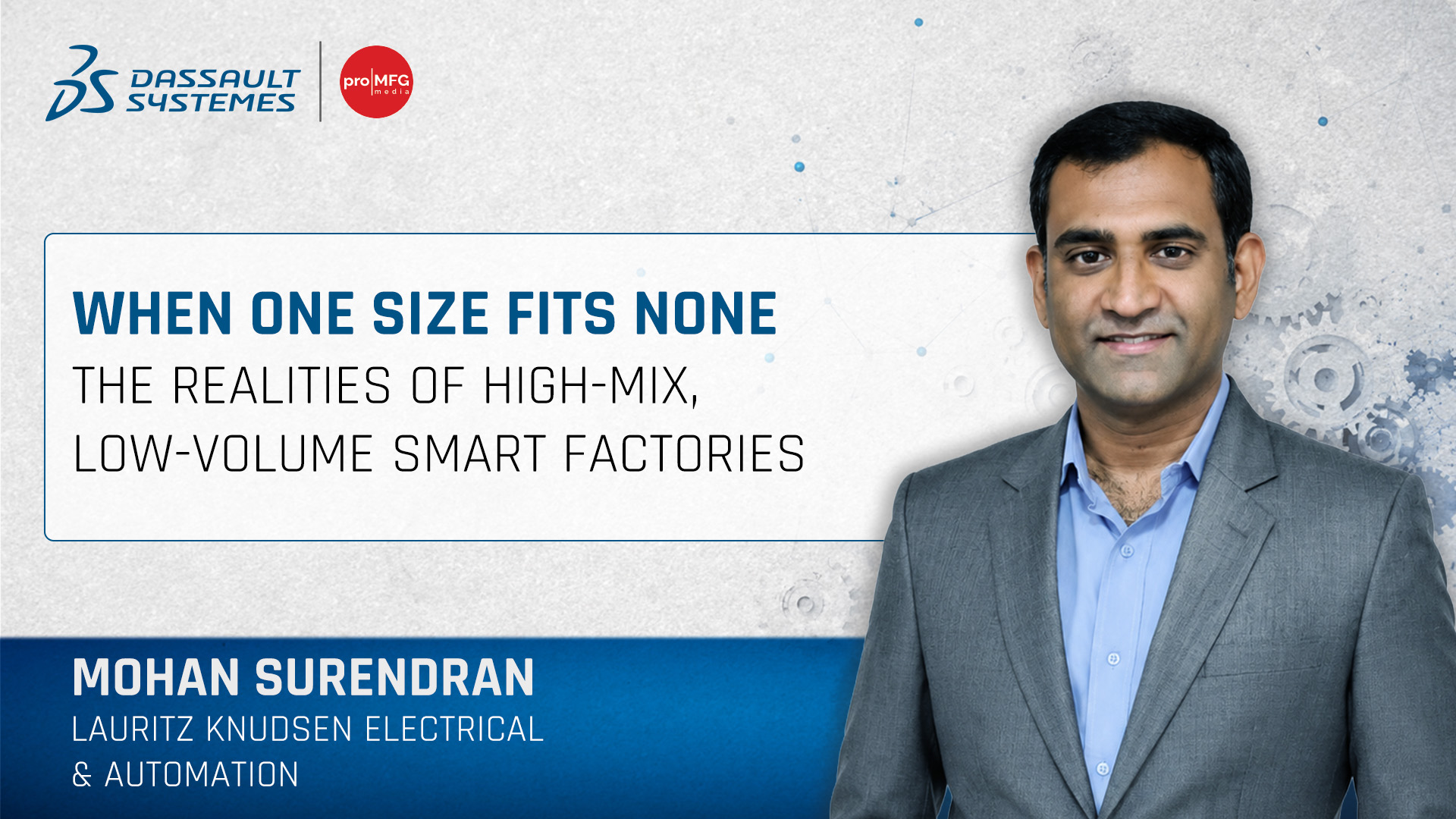
September 2026 : The viral videos circulating online feature sleek, fully automated "dark factories" where robotic arms move in synchronized harmony without a single human in sight. But for industries built on bespoke engineering, that glossy vision hits a hard wall called reality.
At the “Driving Profitable Growth Through Smart Manufacturing” roundtable - presented by Dassault Systèmes and Tata Technologies, powered by Pro MFG Media, and supported by ACMA India - Mohan Surendran from Lauritz Knudsen Electrical & Automation provided an illuminating reality check. In complex, Engineer-to-Order (ETO) environments, hyper-customization makes total automation nearly impossible. The path forward isn't chasing sci-fi factory floors; it's marrying human craftsmanship with AI-driven project intelligence.
Unlike mass-production facilities churning out identical widgets, bespoke industrial electrical setup requires custom design for every client. Heavyweights like Reliance, BPCL, or HPCL don't buy off-the-shelf equipment - they demand tailored specifications.
"There is no unique case - every customer wants something different that suits their facility," Surendran observed. "As we say, one pill cannot work for everyone."
Because of this extreme customization, physical shop floors still rely heavily on hard-copy drawings, precise manual wiring, and painstaking human testing. While automation can streamline up to 40% of standard operations, the remaining 60% rests entirely on skilled human hands.
Relying on human labor in an era of global labor volatility creates severe operational headwinds. Industrial manufacturers face persistent skilled labor shortages, wage fluctuations, and high attrition rates.
For ETO companies, success isn't about eliminating workers - it's about attracting, training, and retaining talent. Building local skill sets and keeping experienced technicians engaged on the wiring line remains a stronger growth driver than chasing full robotic automation.
Handling 50 to 60 custom engineering projects a month - valued between ₹2 crore to ₹3 crore each - requires sharp project management. When delays happen in custom manufacturing, costs multiply exponentially.
Surendran emphasized the critical need for early-stage project health tracking: "If you catch and solve a schedule mismatch in Week 3, you save the project. Once you drift to Week 13, the delivery is delayed, the complexity explodes, and you're almost done for."
Real-time visibility into material readiness versus production schedules allows leaders to intervene early, protecting delivery timelines and customer trust.
The next frontier for bespoke manufacturing lies in intelligent data retrieval. Many established companies built digital product configurators over a decade ago, accumulating massive archives of engineering data.
The current breakthrough isn't creating new data - it's layering Artificial Intelligence over historical archives. By using AI to quickly parse 12+ years of design history, engineering teams can retrieve custom configurations instantly, rapidly generating quotes, drawings, and component lists without starting from scratch every time.
Smart manufacturing isn't a one-size-fits-all formula. For custom engineering operations, true digital maturity doesn't mean building empty, workerless plants. It means using AI to handle complex data behind the scenes, allowing skilled craftsmen to execute flawless work on the floor.

NEWSLETTER
TRENDING ON PRO MFG
MORE FROM THE SECTION