Beyond the Dashboard: The Predictive Power of Manufacturing Tech
#SmartManufacturing #DigitalTwin #TAFE #DataIntegrity #AgriTech #PredictiveMaintenance #AIinManufacturing #Industry40 #Operationalexcellence #Sustainability
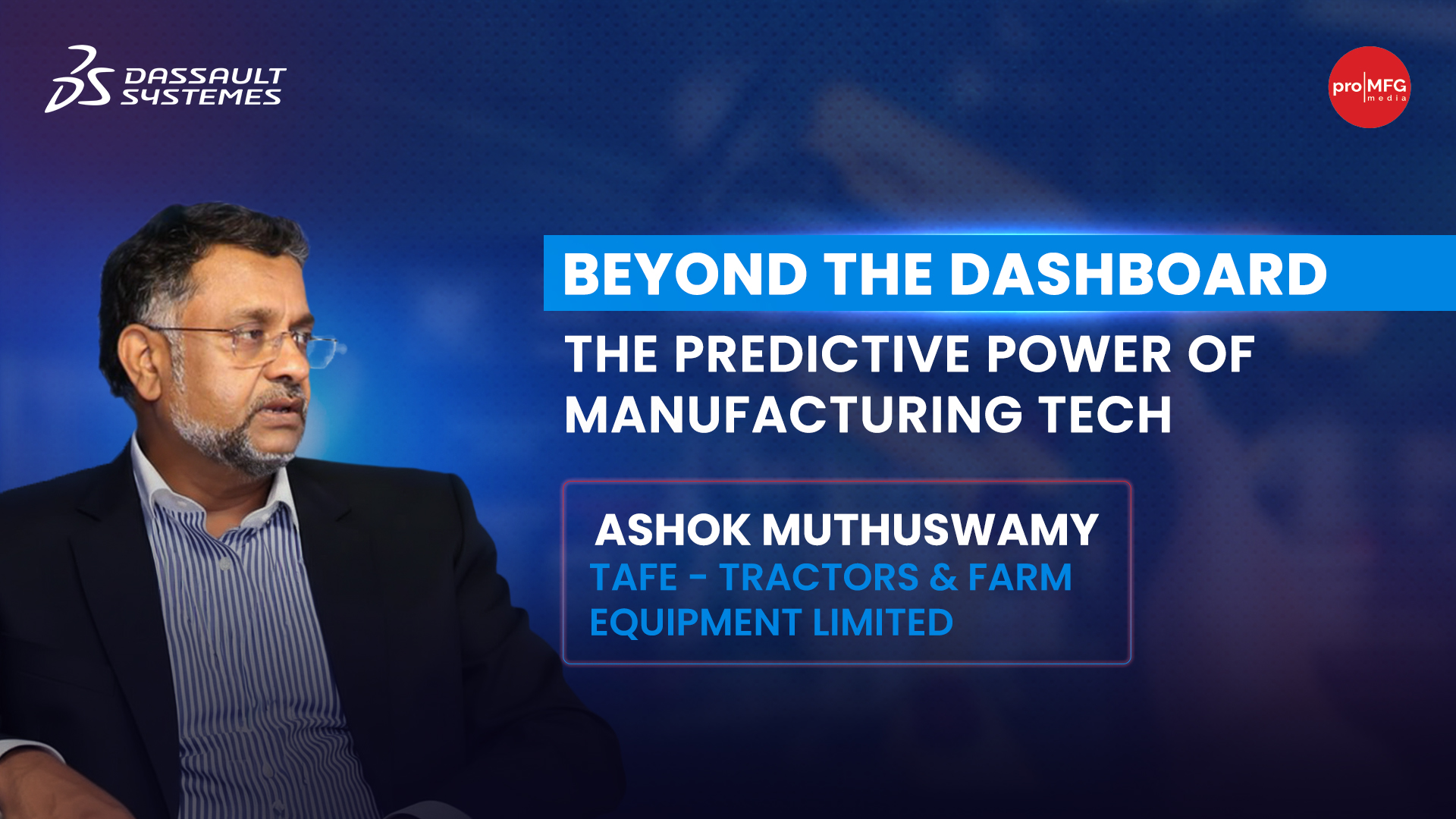
January 2026 : In the complex ecosystem of tractor manufacturing, where the equipment must perform in conditions ranging from the desert sands of Rajasthan to the clay soils of Tamil Nadu, the margin for error is razor-thin. At a recent roundtable hosted by Dassault Systèmes, Ashok Muthuswamy of TAFE shared a compelling vision of how "Virtual Twins" and data integrity are revolutionizing the shop floor - not just through simulation, but through actionable intelligence.
For Muthuswamy, the true power of AI and connected manufacturing lies in its ability to detect "unusual noise" in the system long before a human can. He highlights a common manufacturing challenge: parts that fall within an acceptable tolerance band but, when assembled, create a substandard result. "Computers, or your AI, it all can figure out... connect those dots. First of all, it will connect the dots that you can't see. There may be some dimensional changes which will be perfectly acceptable... but you put it all together, and there is a slightly unusual noise."
This capability to visualize the invisible is the frontier of quality control. By identifying these subtle correlations, technology moves from a passive observer to an active guardian of product integrity.
The scale of TAFE’s operations - managing 800 SKUs - would be a logistical nightmare without a robust digital backbone. Muthuswamy explains that the Virtual Twin allows TAFE to assemble products digitally before a single physical component is even forged. This "digital-first" assembly identifies where a fixture might need changing or where a process might fail, allowing the shop floor to accommodate a massive variety without sacrificing speed or quality.
Sustainability and operational excellence now demand a level of accounting that spreadsheets can no longer handle. Muthuswamy emphasizes the need for systems that "crawl" through various enterprise silos - from SAP to procurement - to provide a "single version of truth."
Whether it is calculating specific energy consumption, monitoring emissions, or managing real-time loads on a smart grid, the sheer volume of variables requires massive computing effort. As Muthuswamy puts it, these calculations must be real-time and automated; they simply cannot be done on the back of an envelope. By integrating these data points, manufacturing becomes not just a process of making things, but a disciplined, data-backed journey toward a sustainable future.

NEWSLETTER
TRENDING ON PRO MFG



MORE FROM THE SECTION