The Dawn of "Work GPT": The Future of Interconnected Manufacturing
#ConnectedManufacturing #Industry40 #ArtificialIntelligence #SchwingStetter #WorkGPT #DassaultSystèmes #SmartFactories #SupplyChainOptimization #productdevelopment #DigitalTransformation"We have heard enough about Chat GPT... I want a 'Work GPT.” - Sunil Dixit, Schwing Stetter India
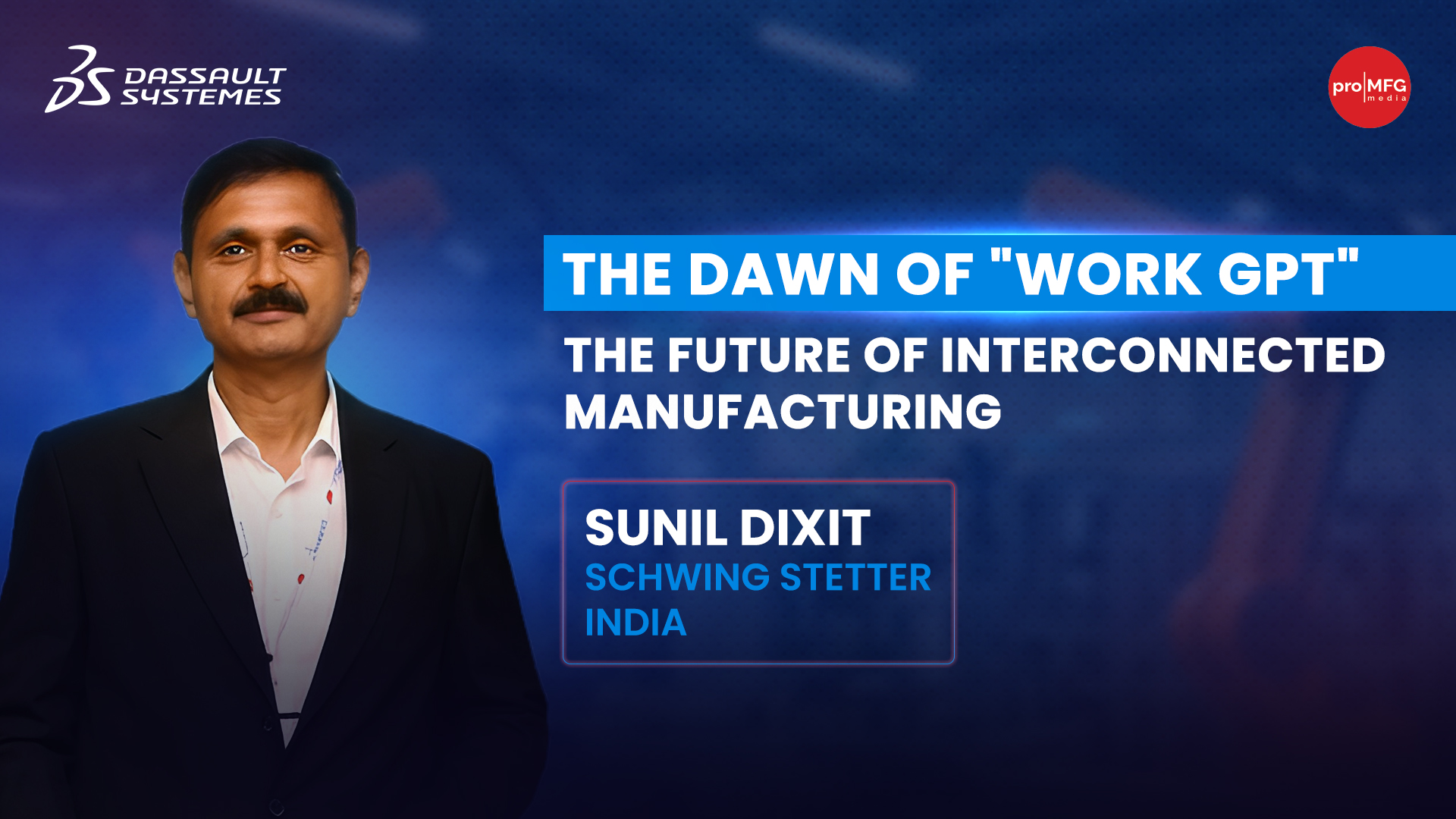
January 2026 : In the high-stakes arena of heavy machinery, the gap between a marketing concept and a finished product has traditionally been a marathon of 18 to 24 months. However, at a recent roundtable hosted by Dassault Systèmes, Sunil Dixit of Schwing Stetter India proposed a radical compression of this timeline. The secret? Moving beyond mere digitalization to a world of "Work GPT" and truly interconnected ecosystems.
While the world remains captivated by conversational AI, Dixit challenges the manufacturing sector to look deeper. He argues that while "Digitalization" is everywhere, true Artificial Intelligence - where a non-human brain actively solves engineering problems - is still in its infancy within the industry. "We have heard enough about Chat GPT... I want a 'Work GPT.' No more chatting. When my designer gives me a 3D model, I offer it to this gentleman who is Chat GPT or Work. Give me the control chart. Suggest me a process flow diagram. Suggest me a factory setup... what will be the line balancing?"
Dixit envisions a future where the grueling manual steps of R&D, supplier development, and quality control charts are compressed by AI. By bringing mechanical, electrical, and software engineers together, he predicts that the industry can crush a 24-month program into just 12 months. This isn't about replacing humans, but about automating the "literature work" of engineering to make manufacturing "better, faster, and quicker."
Manufacturing today is a "blessed function" constantly battling rising customer expectations. Dixit points out that the era of standardized products is over; today’s consumer demands high levels of personalization, from specific engine brands (TATA vs. Ashok Leyland) to custom color palettes.
In the concrete pumping sector alone, Schwing Stetter manages immense complexity. A single machine might use over 400 different steel profiles, and when factoring in height capabilities (40m to 60m) and pump sizes, the potential combinations exceed 900. Managing this "mix" without an interconnected system is no longer feasible.
An interconnected factory is not built overnight - Dixit notes it is a 10-to-15-year evolution. But the result is a seamless, proactive organism where every department anticipates the next move. "Today our stores will know that tomorrow what all suppliers are going to put on what trucks... the shop floor will know what setup he has to put in tomorrow to produce what kind of mix. Everything is needed just because of the connection between the different functions."
This level of synchronization ensures that quality teams know which parts can take the "green channel" and which require inspection, while delivery teams have logistics ready before the machine even leaves the line. This synergy, according to Dixit, is the ultimate "blessing for the customer," ensuring they get exactly what they need, exactly when they need it.

NEWSLETTER
TRENDING ON PRO MFG


MORE FROM THE SECTION