Redefining the Indian Shop Floor: Five Truths Shaping the Software-Defined Factory
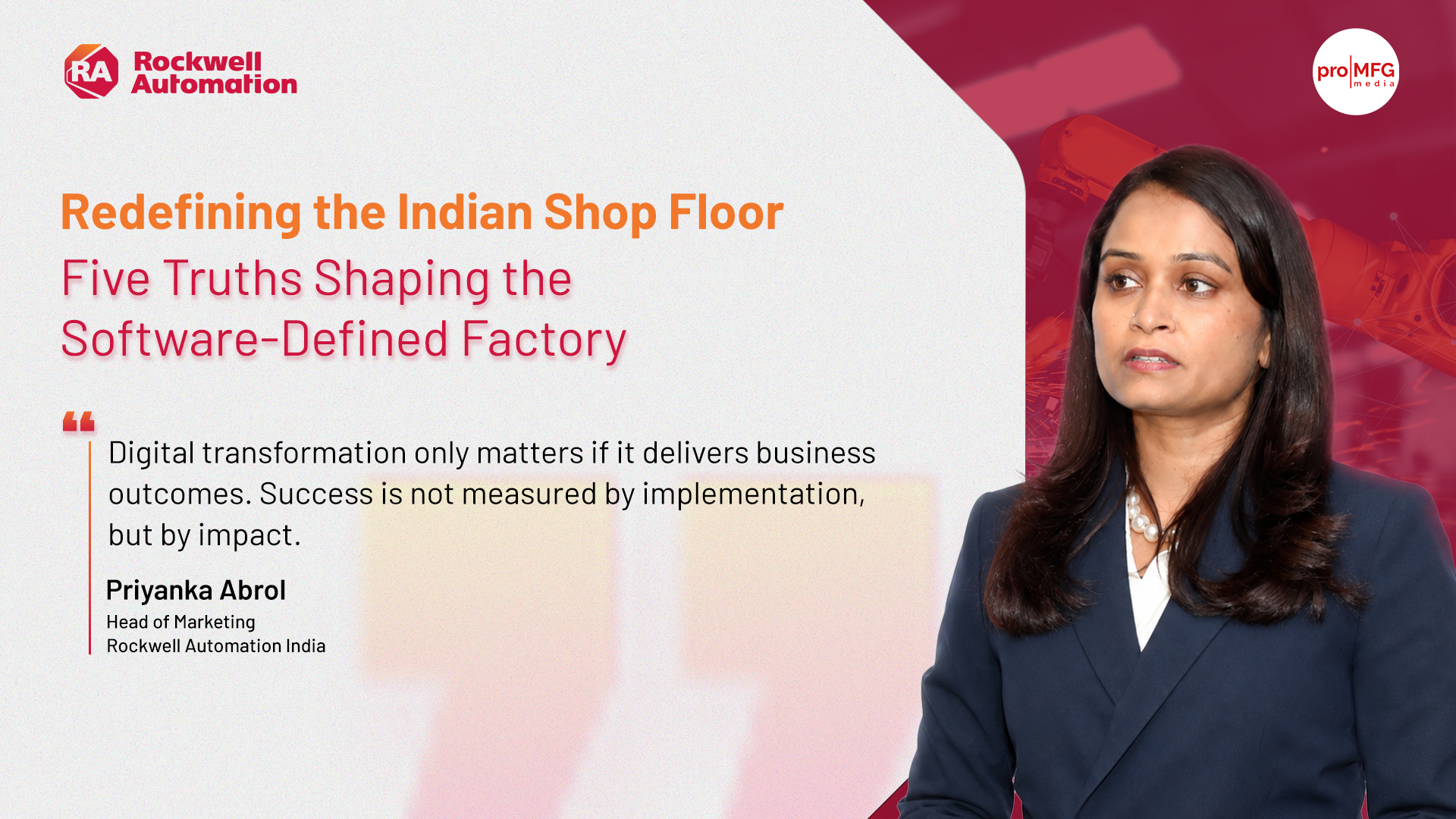
#SmartManufacturing2026 #AutomotiveIndia #DigitalTransformation #RockwellAutomation #SmartFactory #IndustrialAI #EdgeComputing #FutureOfMobility #SustainableManufacturing #SoftwareDefinedFactory“The true measure of an intelligent factory isn’t the depth of its tech stack, but the speed of its real-world impact.” - Priyanka Abrol, Head of Marketing - Rockwell Automation India
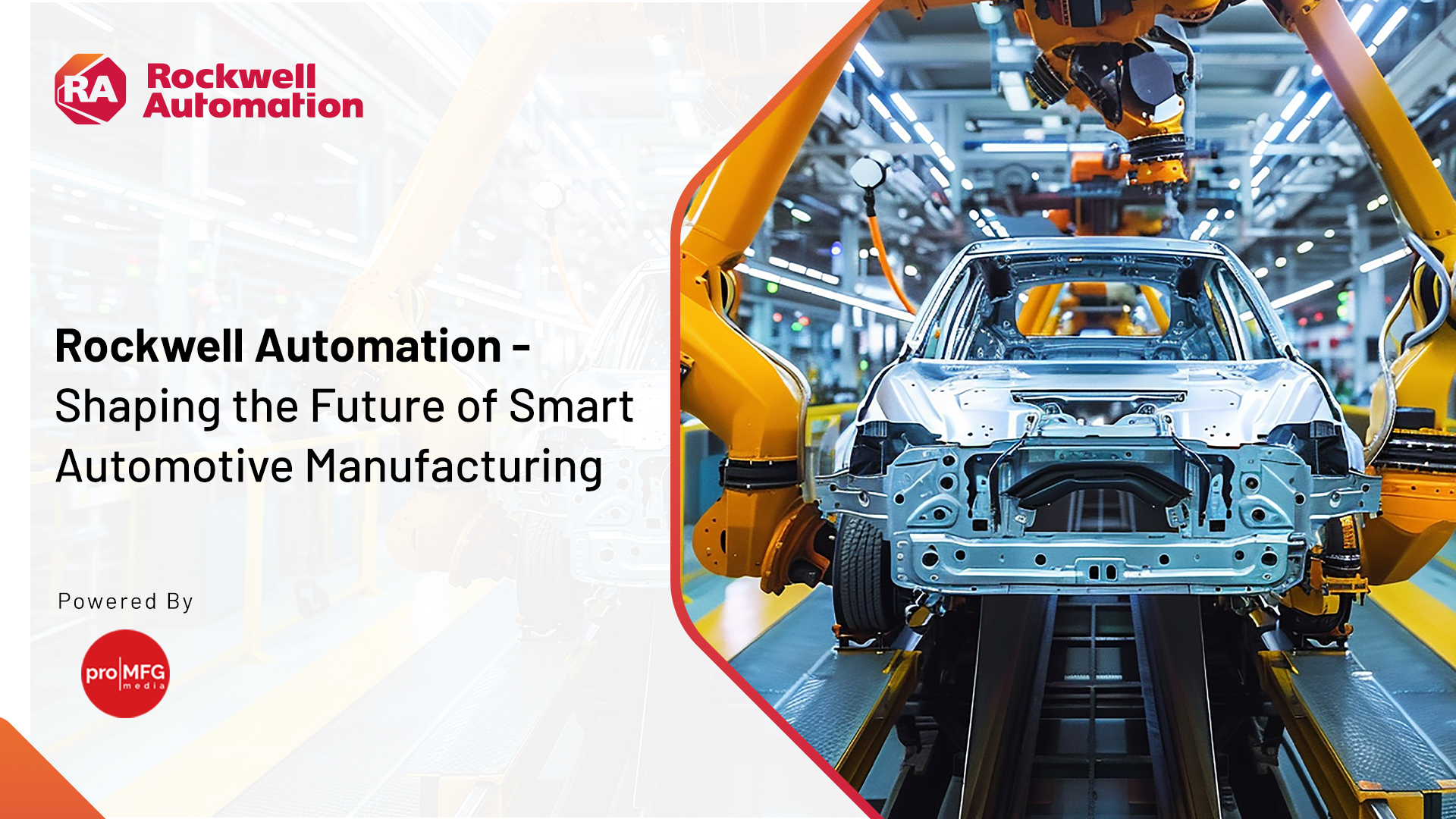
June 2026 : The conversation around the future of automotive production has officially shifted. For years, the industry spoke of digital transformation as a distant destination - a blueprint waiting for the right moment. But walking through the corridors of the Rockwell Automation’s Smart Manufacturing Automotive Summit 2026 powered by Pro MFG Media, one thing became undeniably clear: the future isn’t a pipeline dream anymore. We are actively living it.
Priyanka Abrol, Head of Marketing at Rockwell Automation India, spoke passionately about this structural shift. She emphasized that the theme of this year's summit - Smart Manufacturing and Digital Transformation in Automotive - has firmly moved from visionary keynote slides straight into board-level imperatives. Driven by a collective urgency to build resilient, agile, and high-performance ecosystems, the Indian automotive sector is undergoing a profound paradigm shift.
Here are the five defining takeaways highlighted during the day that are reshaping how vehicles are designed, built, and delivered today.
AI Crosses the Rubicon: From Proof-of-Concept to Production Line:
The era of testing AI in isolated sandboxes is over. The discussion has matured from "Can AI actually work?" to "Where does it deliver immediate, measurable impact?" From predictive design and immersive simulations to real-time quality control on the line, AI is now deeply embedded across the entire manufacturing lifecycle. Moving forward, competitive advantage won't belong to the companies with the highest number of isolated AI tools, but to those who possess the operational capability to scale these intelligent systems across multiple plants.
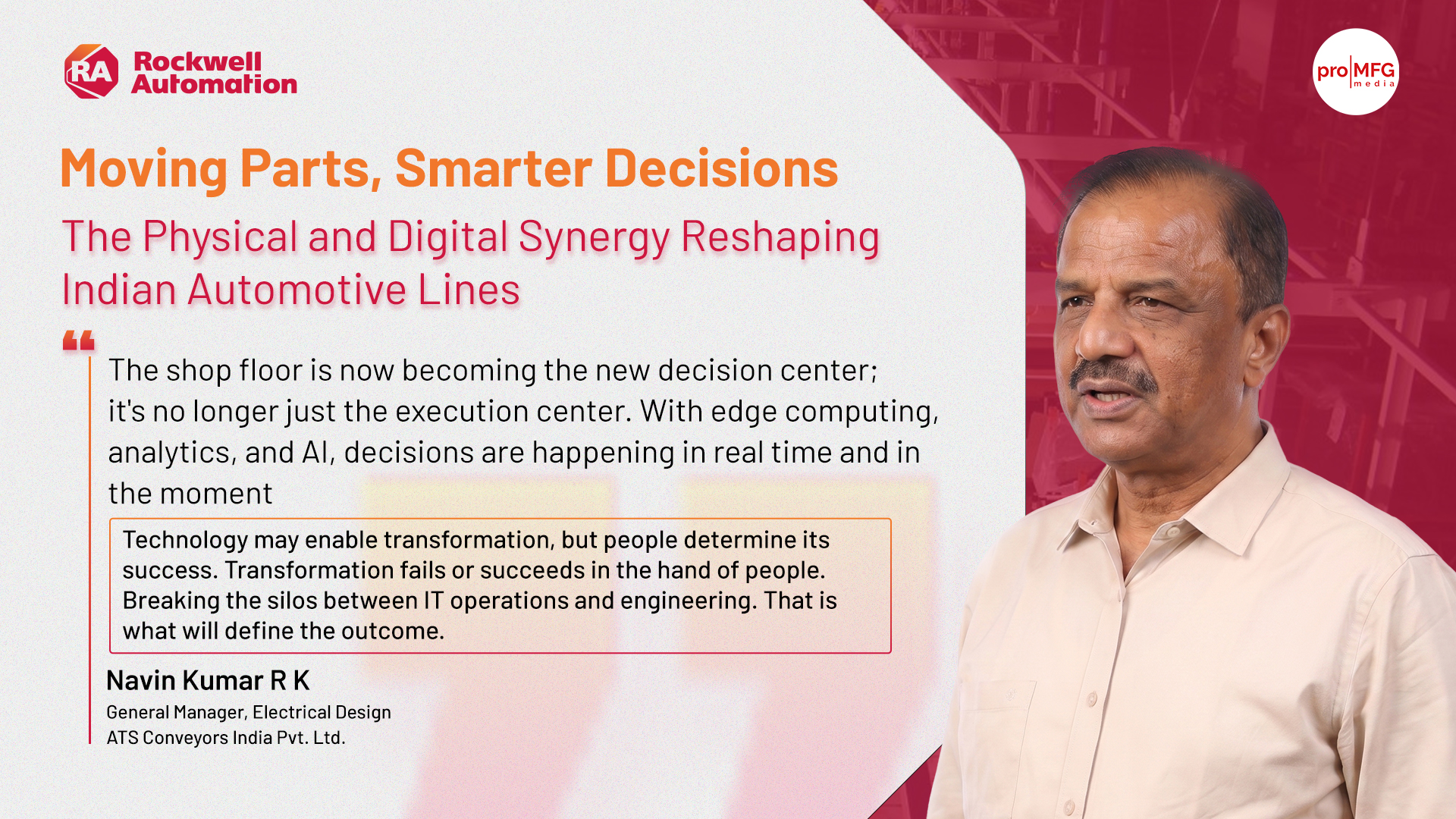
The Shop Floor Emerges as the New Decision Center:
Historically, the factory floor operated on post-fact reporting - engineers analyzing yesterday's errors to fix tomorrow's batches. Edge computing, advanced analytics, and machine-level AI are flipping this model entirely. By pushing processing power directly to the machines, data is acted upon in real time. This minimizes the reliance on delayed, manual escalations. The factory floor has evolved into a self-correcting decision center, shifting operations from reactive troubleshooting to intuitive, in-the-moment orchestration.
Speed, Quality, and Sustainability:
High-performance manufacturing is no longer a one-dimensional race to produce the most units at the lowest cost. Today's market leaders are successfully balancing three competing forces:
•Speed: Utilizing advanced digital twins and Emulate 3D solutions to compress prototyping phases and de-risk new product introductions (NPI).
•Quality: Deploying AI-enabled robotics and vision systems (like Vision AI and Logic AI) to aggressively pursue zero-defect manufacturing.
•Sustainability: Embedding green metrics into daily operational workflows rather than treating carbon neutrality as an isolated compliance checkbox.
Technology Empowers, but People Deliver:
Behind every software-defined factory is a workforce that must breathe life into it. Automation and intelligence fail or succeed based entirely on the humans operating them. Up-skilling floor engineers, arming cross-functional teams with intuitive digital dashboards, and consciously tearing down the walls between operational technology (OT) and information technology (IT) remain the ultimate determinants of digital ROI.
Grounding Innovation in Tangible Business Outcomes:
Innovation without execution is just noise. True digital success isn't celebrated by the mere act of implementation, but by the business metrics it moves. Whether it is faster time-to-market, heightened asset utilization, or enhanced supply chain responsiveness, every technology architecture - from Manufacturing Execution Systems (MES) to Guardian AI - must be anchored to core commercial outcomes.
As an industry, the road ahead is unmistakable. AI-driven operations, software-defined architectures, and highly connected OEM-to-supplier ecosystems are the new baseline. For Rockwell Automation, the goal isn't simply to act as a technology vendor - it is to serve as a committed, long-term transformation partner, driving a more resilient and intelligent automotive manufacturing ecosystem in India.

NEWSLETTER
TRENDING ON PRO MFG


MORE FROM THE SECTION