Heavyweight Ambitions, Lightweight Vehicles: Rewriting India’s EV Blueprint
#Hindalco #ProMFGMedia #SmartManufacturing #SustainableMobility #CircularEconomy #AutomotiveInnovation #WorldEnvironmentDay2023 #EVIndia #ACMAThinkTurf2026 #Lightweighting"The vehicles of tomorrow cannot be built with the materials of yesterday if we want a cleaner planet today." - Kopal Agrawal, CEO - Aluminium Downstream, Hindalco Industries
June 2026 : How do you make an electric vehicle travel farther, run safer, and leave a smaller carbon footprint before it even hits the road? The answer, as it turns out, doesn't just lie inside the software or the battery chemistry. It lies in the very metal that structures the vehicle.
This was the compelling core message delivered at the 4th Edition of the ACMA Automotive Smart Manufacturing Think Turf 2026 Powered by Pro MFG Media, the summit centered on the theme: Transforming Mobility: Innovation, Integration, and Impact. Taking the stage for a timely Industry Special Address - perfectly aligned with World Environment Day - Ms. Kopal Agrawal, CEO of Aluminium Downstream at Hindalco Industries, shifted the spotlight to a critical but under-discussed element of the EV transition: advanced, lightweight materials. Her message was clear: if India wants to slash its reliance on oil imports and pioneer true sustainability, the automotive industry must rethink its relationship with aluminium.
Agrawal grounded her presentation in some startling global vs. domestic data. Globally, the transportation sector drives 28% of aluminium demand. In India? That number drops to just 15%.
The contrast becomes even sharper when looking at per capita consumption: India: 4.4 kg per person. Global Average: 12.5 kg per person. China: 37 kg per person (fueled heavily by aggressive infrastructure and EV ecosystems)
Yet, as the Indian automotive components market projects a steady 8% CAGR, the domestic automotive demand for aluminium is set to outpace it at a rapid 12%. Over the past decade, internal combustion engine (ICE) vehicles have bumped up their aluminium content by 40%. For EVs, that requirement skyrockets, making the metal an indispensable resource for the road ahead.
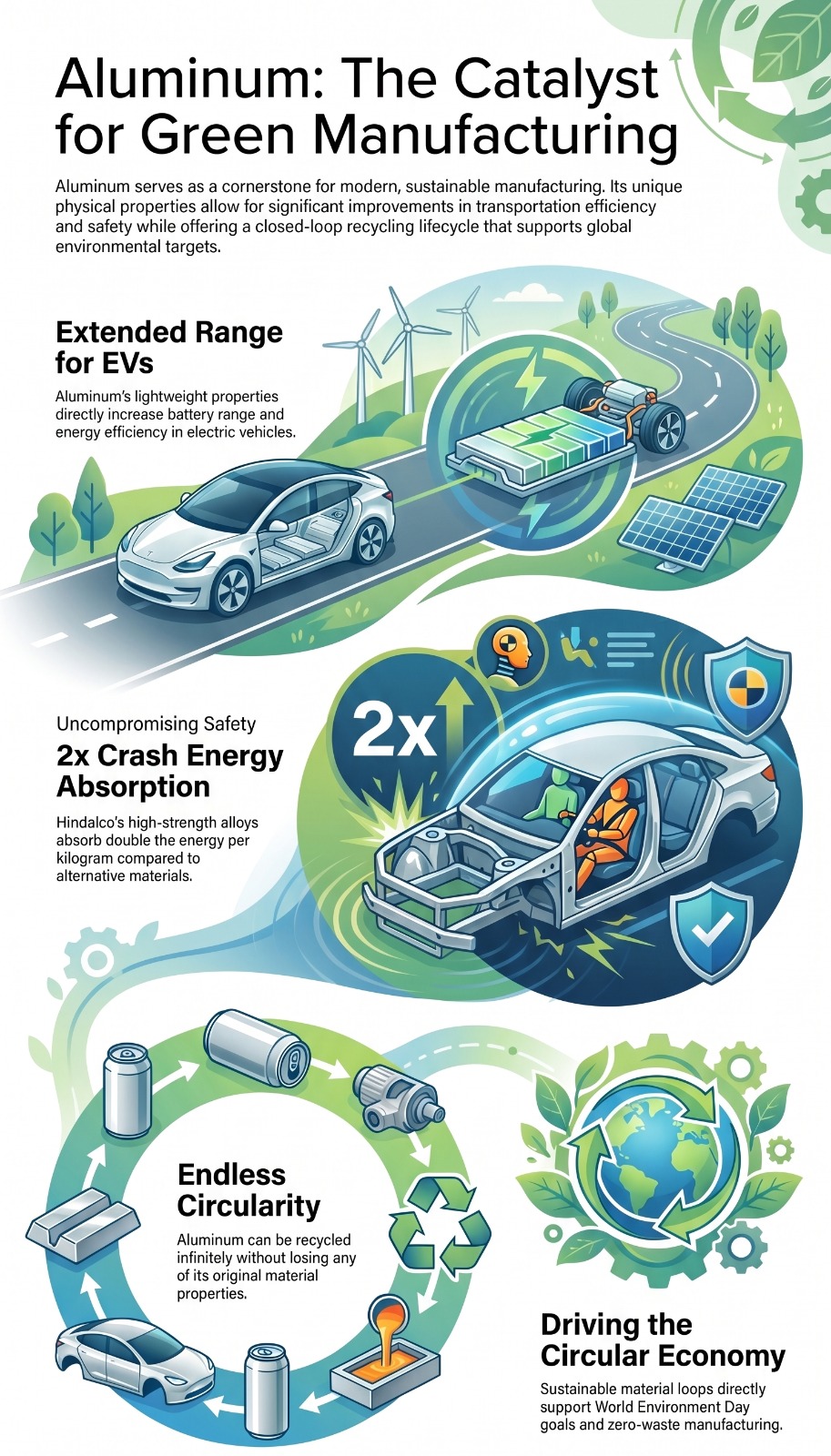
So, why the intense push for aluminium? Agrawal broke down the physical reality of why the material is a natural ally to smart, green manufacturing:
Extended Ranges: Its lightweight properties directly translate to better battery range and higher energy efficiency for EVs.
Uncompromising Safety: Hindalco’s high-strength aluminium alloys offer twice the crash energy absorption per kilogram compared to alternative materials.
Infinite Circularity: Aluminium can be recycled infinitely without losing its properties, directly serving the circular economy goals central to World Environment Day.
From intricate battery energy storage enclosures and ABS blocks to lightweight electric buses and commercial vehicle body structures, advanced alloys are fundamentally reshaping structural safety and weight management.
Perhaps the most actionable takeaway from Agrawal's address was her call to move away from transaction-based relationships. To scale rapidly and efficiently, India needs to mirror models seen in highly advanced EV ecosystems, where material suppliers, engineers, and OEMs collaborate seamlessly right from the vehicle design stage.
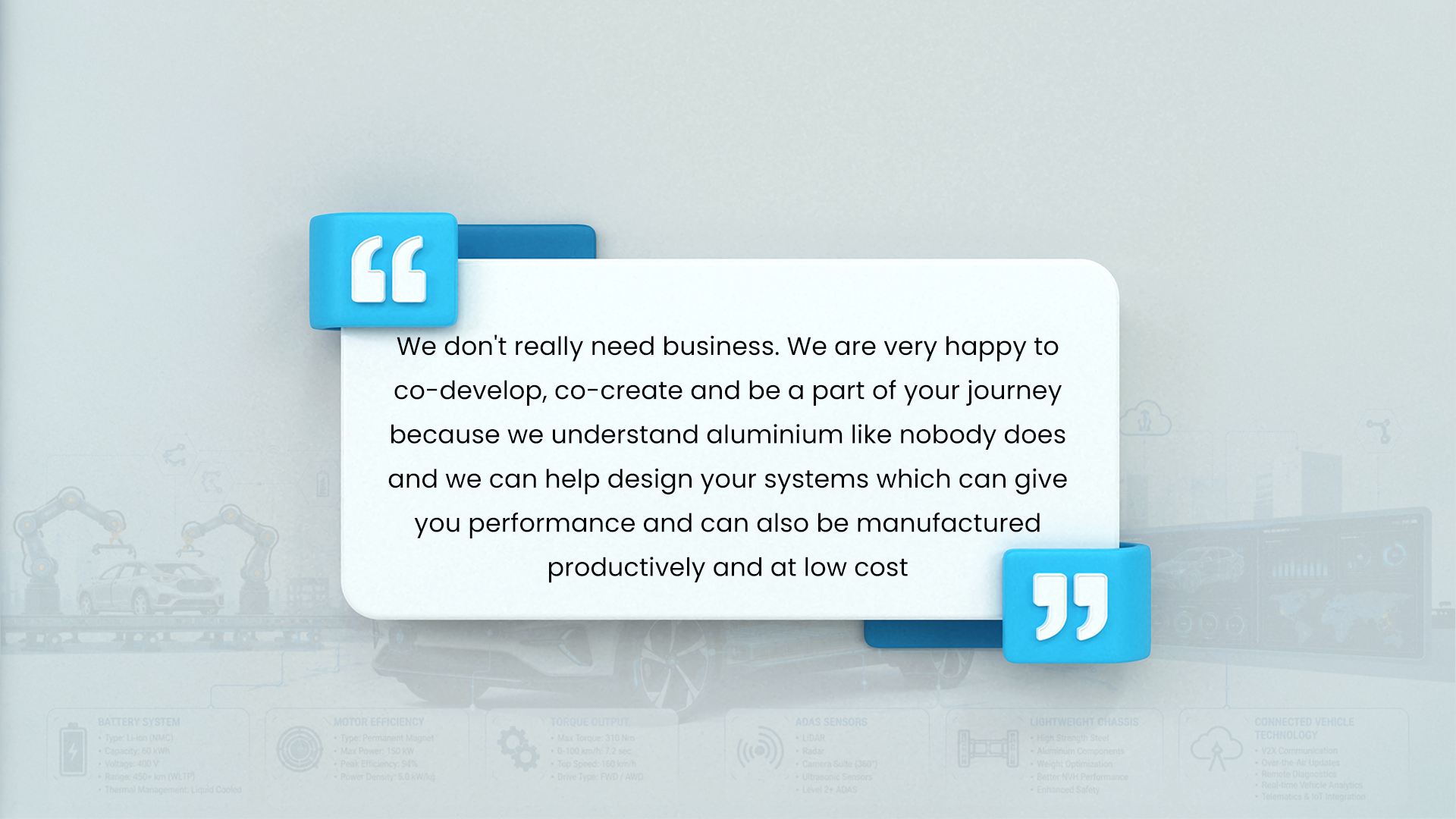
"Early-stage collaboration is critical," Agrawal noted. "Co-creating high-performance, cost-effective solutions is how we build scale." To back this vision, Hindalco is stepping up as a collaborative partner rather than just a vendor. Utilizing its end-to-end integration - from mining to precision engineering - the company is offering localized, reliable automotive solutions aligned with India's "local for local" vision. They are even offering free material design support to encourage automakers to innovate without initial business pressures.
As the summit moved to its next session, the takeaway was undeniable: building a resilient, self-sufficient automotive ecosystem in India requires a shared commitment. By blending intelligent manufacturing with advanced materials, the sector is well on its way to driving a greener, lighter, and more secure mobility future.

NEWSLETTER
TRENDING ON PRO MFG
MORE FROM THE SECTION