The ROI of Real-Time Data: Bridging the Gap in Global Component Manufacturing
#ManufacturingExcellence #DigitalTransformation #SupplyChainVisibility #Industry40 #RealTimeData #GlobalLogistics #SmartManufacturing #RoI #OperationalEfficiency #ConnectedFactory
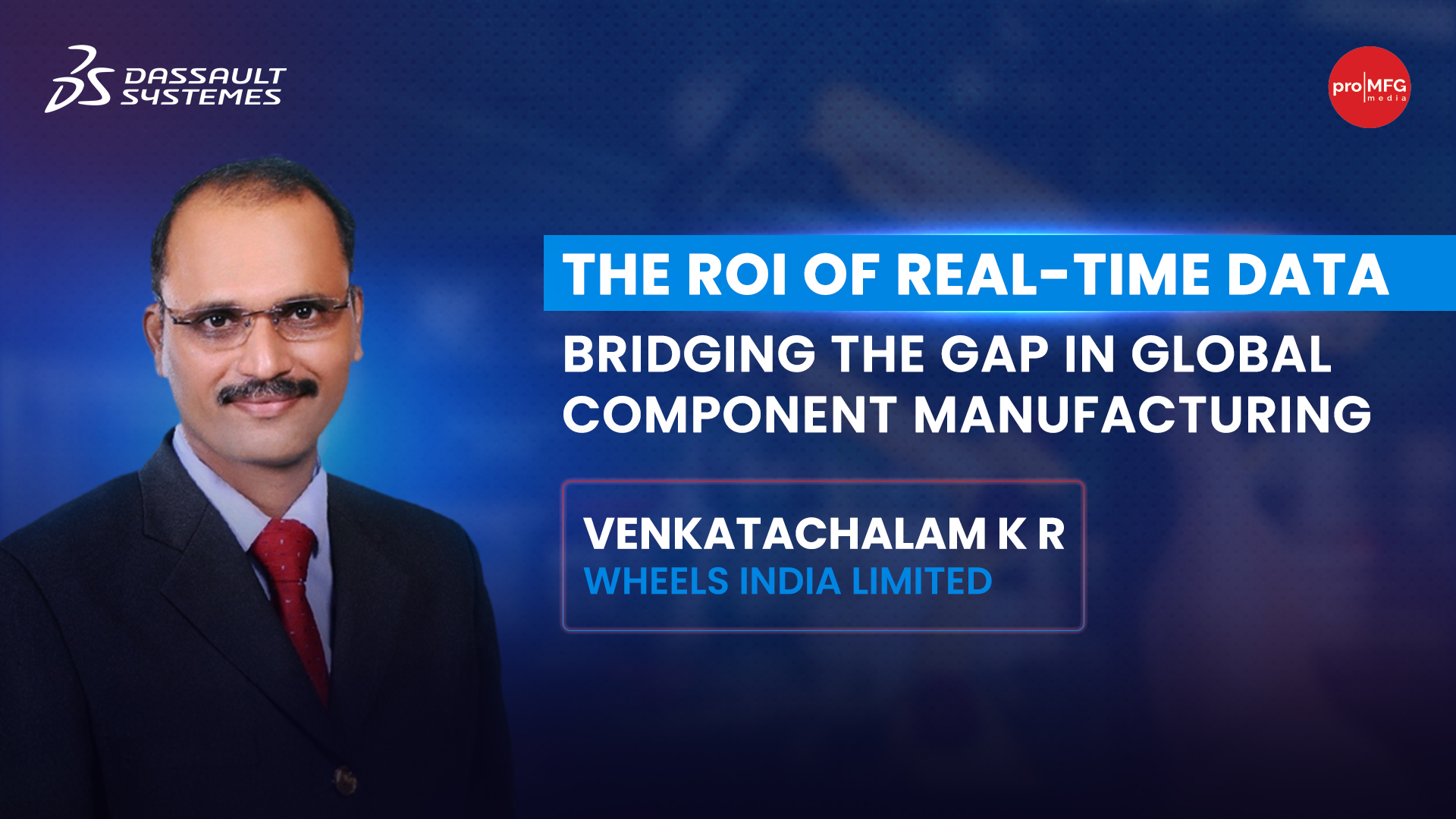
January 2026 : In the world of heavy-duty component manufacturing, the stakes for precision and timing are measured in tons and thousands of dollars. During a high-level roundtable discussion hosted by Dassault Systèmes, Venkatachalam K R from Wheels India Limited addressed the critical intersections of data, discipline, and the physical realities of moving heavy metal across global supply chains.
For many organizations, the hurdle isn't collecting data - it's knowing what to do with it once it’s in the system. Venkatachalam emphasizes that technology must evolve to answer the "what next?" for investors and operators alike. The ultimate capability technology should provide is the ability to turn raw information into a clear return on investment (ROI).
"Whatever we have the data right now, what to do next? This is something as an investor - what is the return on investment we are going to get? How the data will be supported for the business, analyzing completely for the end-to-end supply chain." By studying uncertainty in demand planning and overall operations, technology can provide the foresight needed to improve efficiency. It’s not just about seeing the current state of the business, but about using that data to navigate through market fluctuations and operational hurdles.
The complexity of modern manufacturing often involves "multi-factory" product journeys, where a single component must pass through various locations and outsourced partners before completion. In the context of heavy components - some weighing as much as 6.5 tons - a single manual error or a missed tracking update can lead to a logistical nightmare.
Venkatachalam highlights the "huge liabilities" faced by manufacturers supplying global markets. If a single person in one factory misses a step, the entire dispatch schedule collapses. "If we missed it, then we need to airship it - because we supply it for the global market... even if there are any quality issues, then it will be a huge challenge." Airshipping a 6-ton component is an astronomical expense that erodes margins and stresses the supply chain. This physical weight serves as a metaphor for the digital burden: the heavier the product, the more vital the digital tracking becomes.
To mitigate these risks, the focus has shifted toward a unified digitalization perspective. The goal is to move away from fragmented manual efforts and toward a common platform that integrates real-time data across all locations.
The manufacturing floor of the future, as Venkatachalam describes, is one where integration prevents delays and quality issues before they manifest as costly shipping errors. By finding the right partners to build this real-time visibility, manufacturers can finally replace manual tracking with a digital thread that follows the product from the first operation to the final global dispatch.

NEWSLETTER
TRENDING ON PRO MFG



MORE FROM THE SECTION