The Triangular Approach: How India Can Bridge Deep Science and Street-Ready EV Tech
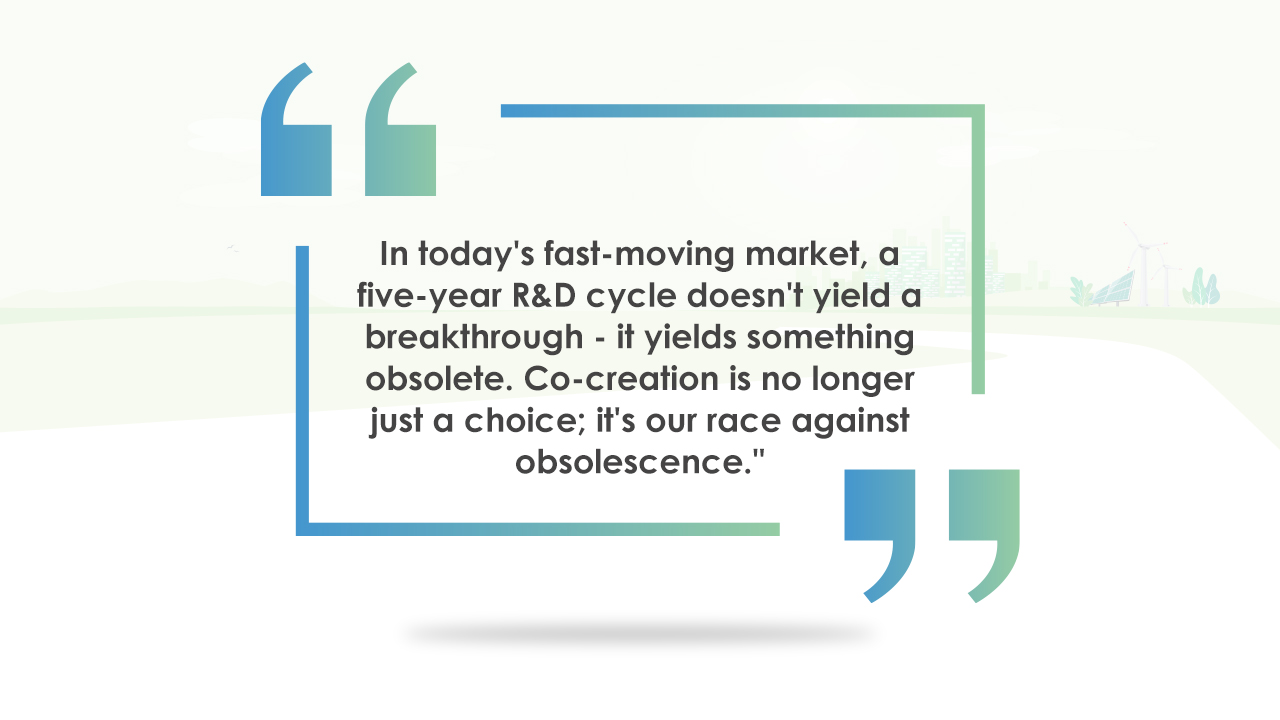
#MobilityReimagined #EVEra #SmartEngineering #CoCreation #ACMA2026 #AdvancedMaterials #AutomotiveR&D #EcosystemCollaboration #DeepTechIndia"In today's fast-moving market, a five-year R&D cycle doesn't yield a breakthrough - it yields something obsolete. Co-creation is no longer just a choice; it's our race against obsolescence." - Ganesamoorthy Arumugam, Head of Engineering - CVS R&D Region India at ZF Group
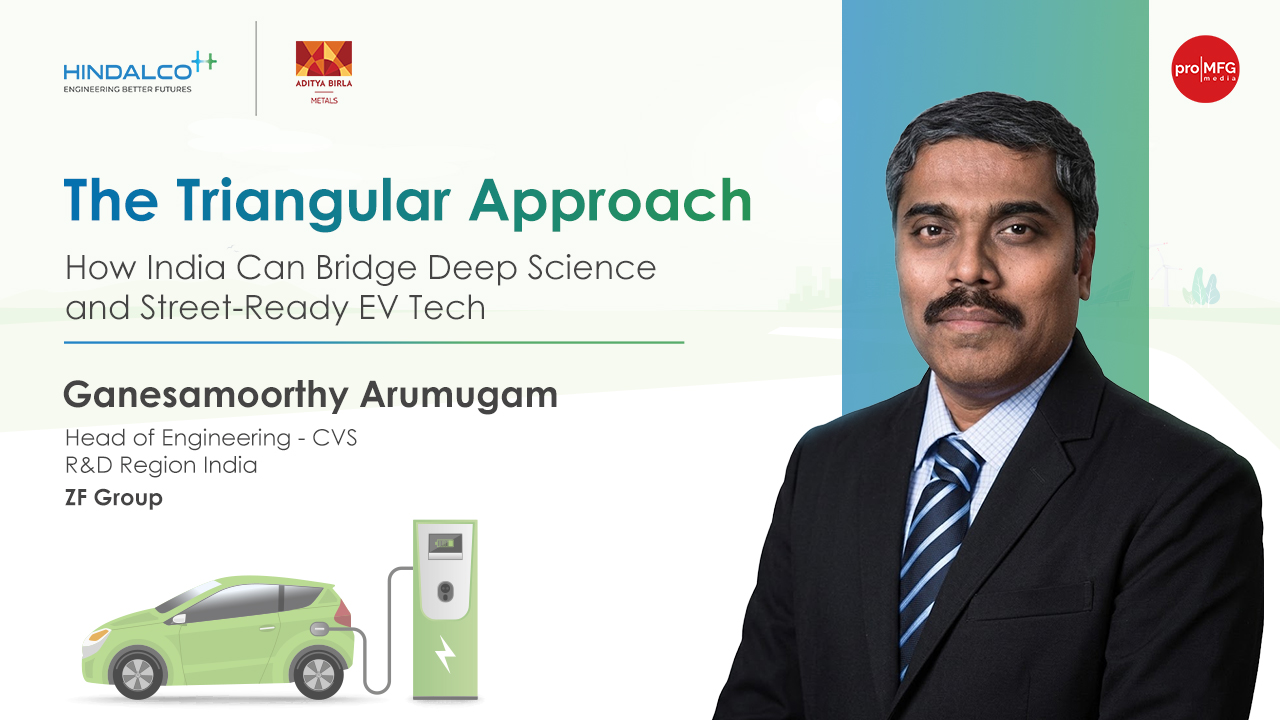
June 2026 : There was a time when automotive innovation followed a comfortable, solitary script. A lone genius or an isolated R&D team would spend three to five years tinkering behind closed doors before finally bringing a shiny new component to market. But in the fast-accelerating EV era, a five-year development cycle is a death sentence. By the time your product hits the asphalt, the technological landscape has already shifted beneath your feet, rendering your hard work obsolete on day one.
This critical challenge took center stage at the Hindalco CXO Power Breakfast, a high-powered roundtable hosted on the sidelines of the 4th Edition of the ACMA Automotive Smart Manufacturing Think Turf 2026, powered by Pro MFG Media and Knowledge Partner - CAAR & Supporting Partner - GARC.
Industry leaders gathered to dive into the theme: Reimagining Next Generation Mobility Platforms: Lightweighting, Smart Engineering & Sustainable Manufacturing for the EV Era.
Among the standout perspective-shifters was Ganesamoorthy Arumugam from ZF Commercial Vehicle Control Systems (CVS) R&D India. He laid out a compelling argument for shattering corporate silos in favor of "co-creation" - a fast-paced, collaborative framework designed to beat the clock on technological obsolescence.
True innovation doesn't happen in a vacuum; it triggers when real-world problems force a breakthrough. For EV developers, the ultimate challenge is balancing strict manufacturing constraints and physical material limitations against sky-high user expectations for range and efficiency.
To bridge this gap, Arumugam advocates for a triangular approach that connects three critical pillars:
- The OEM / Tier-1 Innovators:Driving the core product architecture and identifying market needs.
- The Supplier Partners: Infusing downstream manufacturing reality and component value early into the design phase.
- The Academia & Research Institutes: Unlocking cutting-edge, foundational science that corporations rarely have the bandwidth to develop from scratch.
By locking these three entities into a collaborative loop, the industry can design products that are theoretically brilliant, logistically viable, and instantly ready for production.
To prove that this isn't just fluffy corporate theory, Arumugam shared a phenomenal real-world success story. ZF India partnered with the Council of Scientific and Industrial Research (CSIR) in Trivandrum - an institution deeply accustomed to developing ultra-high-strength, ultra-lightweight materials for India's space program.
Space tech and automotive engineering usually operate on entirely different planets because of one massive variable: cost.
"When you are building a rocket, you aren't sweating the budget the way an automotive player has to," Arumugam noted. "But our unique expertise lies in taking that raw, high-end science and tailoring it for commercial reality."
By co-working with CSIR's PhD scholars and applying rigorous cost-engineering, they successfully developed a proprietary aluminum alloy. The results were game-changing:
- • 20% higher strength than conventional variants.
- • 100% corrosion resistance, completely eliminating the need for expensive anti-corrosion chemical coatings on several aluminum parts.
This is the ultimate blueprint for a self-reliant India. The deep-tech platforms exist right under our noses in national laboratories; the automotive industry just needs to step in and apply the economic filter to make those materials street-ready.
Arumugam didn't just leave the room with ideas; he proposed an actionable framework to keep the momentum alive. He suggested publishing a unified technology roadmap backed by a strict, quarterly cadence.
Whether connecting virtually or face-to-face, these quarterly syncs would allow industry experts to directly match specific, urgent corporate problem statements with the exact academic minds and supplier partners capable of solving them. From there, the ecosystem can decide whether to sponsor the project or co-develop it dynamically.
The EV transition is moving too fast for anyone to walk alone. By pooling India's immense academic brainpower with industrial manufacturing grit, the local ecosystem won't just keep pace with global disruption - it will actively dictate it.

NEWSLETTER
TRENDING ON PRO MFG


MORE FROM THE SECTION